
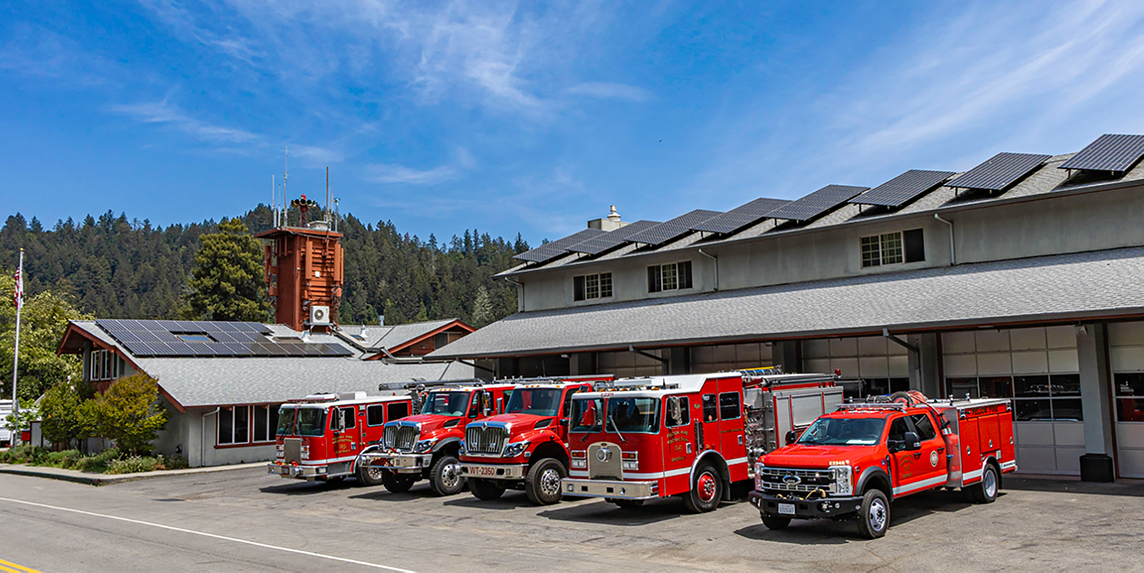
With the passage of the 218 Benefit Assessment put to Felton voters in a special election this summer, that new funding is meant to expand staffing, improve department infrastructure and improve emergency response.
Now the Felton Fire Protection District faces a pivotal transition in its board leadership, and voters will choose two board members to help guide it.
Incumbent board members Craig Winter and Norm Crandall, along with longtime former firefighter and board member Jim Anderson, outlined their priorities during a recent candidate forum moderated by Lookout Executive Editor Richard Martin.
The Nov. 3 general election comes after district property owners approved the 218 Assessment, with 67.88% of the weighted vote in favor. The measure is intended to move Felton Fire beyond its longstanding reliance on an all-volunteer model toward more consistent, around-the-clock emergency coverage.
The next board will help determine how the new revenue is spent, how firefighters are recruited and retained, and which equipment and facility improvements receive priority. Although the three candidates share a commitment to improving emergency services, they emphasized different strengths and approaches to the district’s future.
Winter, a technology-industry product manager who has served on the board for just over a year, emphasized planning, measurable results and public accountability.
“I want you to picture this district six months from now,” said Winter, describing a vision of a fully staffed professional and volunteer department operating 24 hours a day, seven days a week.
He pledged to make the district’s progress visible through a public response-time dashboard, a roadmap tracking goals and a budget tracker updated monthly.
“As a technical builder and entrepreneur, I can be relentless at solving problems and getting things done and mapping them out,” Winter said.
His priorities include recruiting paid firefighters, replacing or improving aging equipment, upgrading protective gear and addressing station deficiencies. He said the district should measure its success by whether residents consistently receive fast emergency responses, including for medical calls.
Winter also advocated for stronger emergency communications between first responders and residents, including neighborhood radio systems and text-message alerts for evacuations, power outages and other emergencies. He chairs the Forest Lakes Firewise group, which he said represents 732 parcels, and argued that community preparedness should complement the department’s response capabilities.
“Neighbors should know squad members by name,” said Winter, adding that firefighters should become familiar with homes, streets and neighborhoods throughout the district.
Crandall, who has lived in Felton since 1996, highlighted his experience as a volunteer firefighter, youth mentor and community volunteer, as well as his service on the fire district board, including as board chair. He said the district needs responsible financial stewardship, reliable emergency response and honest, transparent communication as it begins using the new assessment revenue.
Crandall emphasized the importance of hiring a permanent fire chief who understands the community and can build relationships with neighboring agencies. He said the board must recognize the distinction between governance and daily operations, leaving operational decisions to the chief while maintaining close communication and oversight.
“The chief is where things really get done,” Crandall said.
He also called for a capital improvement plan that identifies long-term needs and distinguishes urgent repairs from projects that can wait. Priorities should include maintaining crew readiness, improving sleeping arrangements and providing appropriate bathrooms and other facilities for firefighters.
Crandall said the district has already established separate accounts for assessment revenue and its existing general funds, allowing expenditures to be tracked independently.
He pointed to improvements in public transparency, including accessible board meetings, recordings and opportunities for residents to review decisions. He said the district received a transparency rating above 95% in its most recent Local Agency Formation Commission (LAFCo) report, which he described as the highest among special districts in the county.
For wildfire preparedness, Crandall emphasized staffing and training, public education and equipment. He also noted the challenge of obtaining new firefighting engines, which can have wait times of three years, and the need to help neighborhoods address vulnerabilities, such as aging fire hydrant systems.
Anderson, a lifelong San Lorenzo Valley resident who has lived in Felton for more than 50 years, offered the perspective of a veteran firefighter and department advocate.
He began volunteering with the department in 1973 and spent 26 years as a volunteer, serving as a fire captain and EMT engineer before joining the district board in 1999. His community service has also included the Mountain Parks Board, LAFCo, county redevelopment oversight committees, the sheriff’s advisory process and the substance abuse commission.
Anderson said his professional background includes senior management responsibility for operations and finance at a Fortune 500 company, along with experience serving on nonprofit boards. He noted that the department has grown from approximately 200 calls annually when he began volunteering to nearly 700 calls a year.
“We have the money to do what we need to do, but now we need to make sure we do the right things with it,” Anderson said.
He identified firefighter safety, training and equipment as top priorities, along with careful financial management to ensure the district can sustain its new staffing model. He said the assessment revenue must be used according to its designated purposes and that the board should take steps to ensure compliance with the measure’s requirements.
Anderson also emphasized the importance of maintaining and upgrading the existing station, including improving sleeping accommodations and making the facility more suitable for a workforce that includes women and men.
For wildfire readiness, he advocated specialized equipment and hands-on training, including opportunities to practice wildland firefighting techniques.
All three candidates agreed that recruiting and retaining firefighters will be a challenge as the district moves toward paid staffing. Anderson acknowledged that Felton cannot match the salaries offered by larger departments, while Winter argued that strong training and a positive workplace culture could encourage firefighters to stay for several years.
Crandall said Felton’s training opportunities could also become a long-term asset. He described work with Cabrillo College to develop a firefighting course that could provide college credit for students and firefighters while potentially generating revenue and recognition for the district.
The candidates also agreed on the importance of public engagement. They encouraged residents to attend meetings, ask questions and participate in preparedness efforts, such as Firewise and Community Emergency Response Team programs.
The stakes extend beyond the boardroom: the district must translate the community’s financial investment into improved emergency services while maintaining public trust.
Two board seats are on the ballot Nov. 3. A fourth name, Bill Finlayson, may still appear on the ballot despite his withdrawal from the race, Martin said during the forum.
The candidates each said they would remain involved with Felton Fire and the broader community regardless of the election’s outcome.