

This article was contributed by CLX Group
The Venezuelan consumer technology market has evolved into a sector that combines mobile devices, computing, digital entertainment and connectivity solutions.
A prime example within the regional landscape is CLX, a company that evolved from being a specialized business partner to establishing itself as a multi-brand distribution and retail infrastructure hub focused on marketing cutting-edge technology.
Through a strategic corporate model, the company—led by CEO Nasar Ramadan Dagga Mujamad—has brought together the world’s leading tech giants in its showrooms, responding to the dynamics of a market that demands direct access to cutting-edge innovation, technical support and official warranties.
In this regard, the Venezuelan company recently announced its consolidation as a multi-brand retailer, bringing together renowned companies such as Apple, Lenovo, Nintendo, Sony, HONOR, Xiaomi, Epson, Starlink and LG, in addition to its own brand.
This diversification allows the company to target different segments of the technology market, ranging from smartphones to smart home solutions and internet access infrastructure.
From a specialty retailer to a cutting-edge multi-brand store
The origin of CLX’s business model in the local market stems from a vision of gradual expansion within the consumer electronics category. In its early stages, the company established key partnerships to serve as the official representative of top-tier international brands in Venezuela.
However, in light of structural changes in consumer habits and the need to offer comprehensive solutions under one roof, the company—led by Venezuelan entrepreneur Nasar Dagga—decided to diversify its commercial portfolio and transform its physical locations into multi-brand stores.
This strategic decision allowed the corporate brand to establish itself not only as a point of sale but also as a leading technology retailer in the country’s major regions, including high-traffic shopping centers in Caracas, Carabobo, Aragua and La Guaira.
The value proposition of the multi-brand concept is based on three fundamental pillars. First is portfolio diversification, focused on the simultaneous availability of solutions for the home, mobility, computing and industrial productivity on a single commercial platform.
Added to this is the user experience, also known as the Experience Shop. These are interactive demo areas that allow users to interact directly with hardware and software ecosystems before making a purchase decision.
Finally, this trio is rounded out by direct agreements with global technology firms to ensure the quality and continuous availability of products in the high-end market.
The Diversification of the Technology Ecosystem
The most significant aspect of CLX’s strategy lies in its ability to bring together, under a single retail infrastructure, products from technology companies that lead global rankings in patents and innovation.
As a result, the showroom floors feature a diverse selection ranging from consumer goods to advanced satellite connectivity. For example, the smartphone segment represents one of the fastest-moving categories in tech retail.
In this regard, CLX offers high-end mobile devices from brands such as Samsung, HONOR, Xiaomi and Apple. The inclusion of these brands ranges from devices with foldable screens and generative artificial intelligence integration to devices focused on professional photography and high-performance processors.
In the entertainment sector, the multi-brand ecosystem brings together industry leaders such as Sony, Nintendo and LG. The product lineup ranges from state-of-the-art video game consoles to televisions featuring OLED and QLED panels and ultra-high-definition (4K and 8K) image processing technology designed for the connected home.
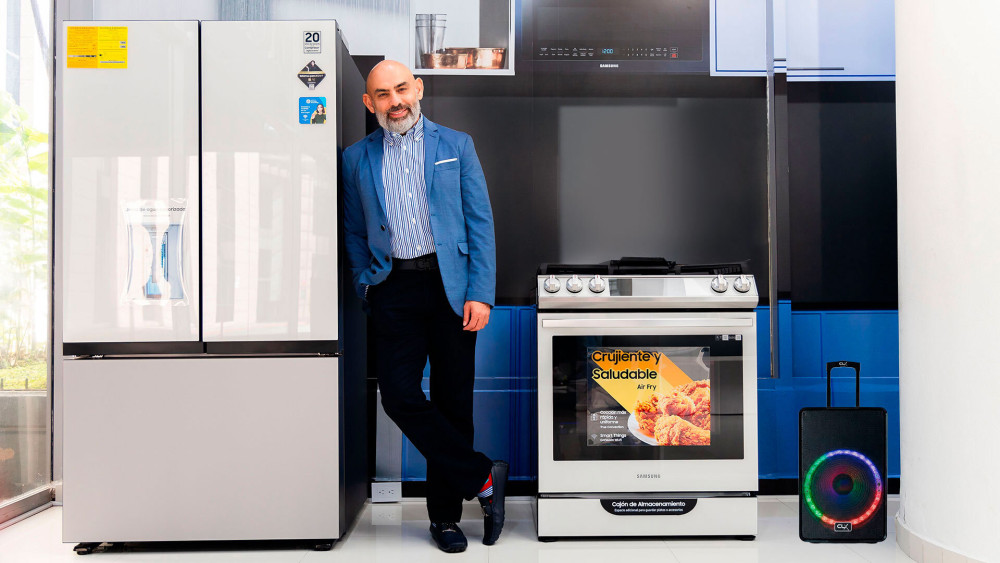
Meanwhile, for the corporate, professional and educational sectors, the chain offers computing and printing solutions through brands such as Lenovo and Epson, providing everything from high-performance workstations to continuous printing systems with low operating costs. Additionally, the portfolio is complemented by the in-house brand CLX, which focuses on serving specific niches in affordable technology and home appliances for the local market.
Next-Generation Connectivity
One of the most recent milestones in the adoption of cutting-edge technology within the retail sector is the introduction of satellite connectivity solutions such as Starlink. Following a strategic partnership with the U.S.-based company SpaceX, CLX, through MultiMax, began marketing Starlink antenna kits.
This offering aims to address telecommunications infrastructure challenges, enabling residential and corporate users in remote or hard-to-reach areas to connect to high-speed, low-latency internet networks.
According to DataReportal’s “Digital 2025: Venezuela” report, the Latin American country had 17.5 million internet users at the start of 2025, equivalent to 61.6 percent of the population. The report also recorded 22.5 million active mobile cellular connections, a figure that does not necessarily correspond to the number of people, since a single user may have multiple connections. These indicators help contextualize the demand for digital devices and services in Venezuela.
The Economic Impact on the Retail Market
In the case of Venezuela, the consolidation of business groups focused on technology retail—such as CLX—has had a direct impact on revitalizing the local economy.
According to statistics released by the business conglomerate itself, by the end of 2025 it had created 6,500 direct jobs and 5,300 indirect jobs in the country, thanks to the opening of various multi-brand stores.
Furthermore, according to analyses by technology business experts, the adoption of international standards in store design, data security and payment gateways enhances the competitiveness of the national retail sector.
For a market in constant transformation such as Venezuela’s, the presence of retail platforms capable of bringing together renowned international brands serves as an indicator of commercial adaptability. Thus, the ability of these structures to maintain up-to-date inventories and uphold corporate standards of customer service will define their relevance in the regional economic landscape over the coming years.
The editorial staff of the Press Banner was not involved in the creation of this content. The content is for general information and does not constitute the financial, medical or professional advice of this publication. Readers should consult qualified professionals regarding their individual circumstances. The Press Banner disclaims any liability for loss or damage resulting from reliance on this content.