


Semi crash closes Mount Hermon Road
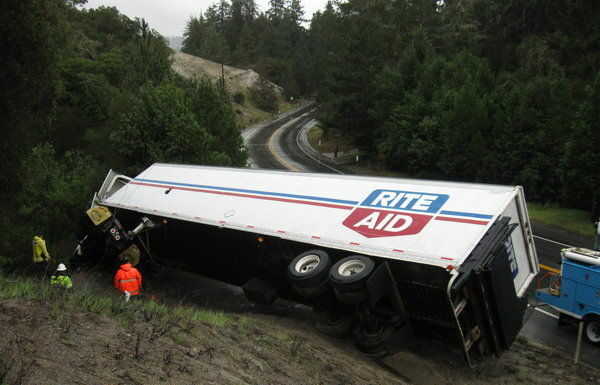
A portion of Mount Hermon Road between Felton and Scotts Valley will be closed in both directions until this afternoon after a semi-truck lost control and partially tipped over along the roadway.
SV Middle School goundbreaking, despite Trump order
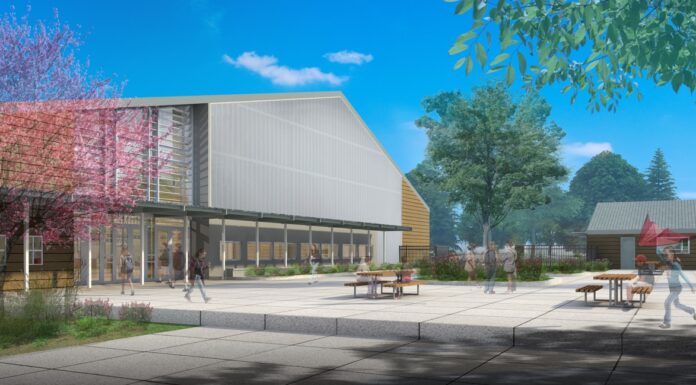
The Scotts Valley School District has scheduled a groundbreaking ceremony for its new middle school, even though the project remained stalled this week by a Presidential order.
Scotts Valley podcast puts mistreatment of children in the spotlight
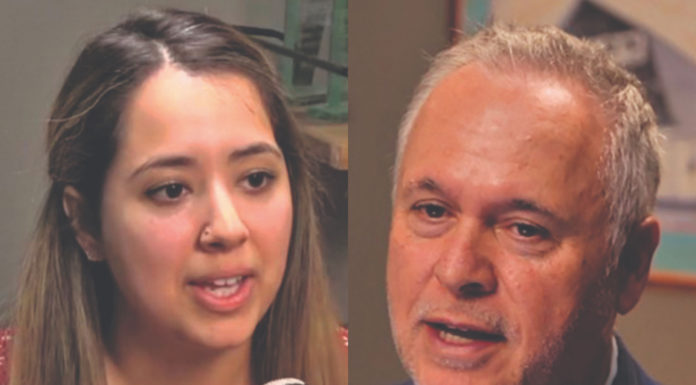
Starting this weekend, a Scotts Valley podcast focusing on protecting children will begin rolling out a series of episodes.
Stephanie Barron Lu, co-chair of the Children's Network of Santa Cruz County who co-hosts the programming with Robert Aldana, a Scotts Valley-based realtor, says she’s confident...
San Lorenzo Valley Water District increases bulk water rates

On April 16, SLVWD voted to raise the rates on bulk (surplus) water. The SLVWD agenda stated that there are “approximately 20 active surplus water users, of which, about 35-percent are higher usage and 8 have addresses on file that are out of our District.” The proposal was made to increase the rate from $31 to $103; in addition to ‘consumption’ charge of $10 for each unit of water (748 gallons) delivered. It was stated that “the intent of the change in Bulk Water rates is to discourage usage outside District Boundaries, encourage conservation and balance Bulk Water Rates more equitably with fixed meter rates and charges.”After much discussion by the Board of Directors, Director Baughman suggested going ahead with the increase and revisiting the issue later. Director Brown agreed. Director Hammer recommended that they “monitor who is buying and using SLVWD water.” President Bruce suggested that “staff bring this back to the Board with a quarterly report in three months comparing current information to information from one year ago.”In July, the next time that Boulder Creek resident, Daniel Burke, purchased bulk water; he discovered that his bill had increased “from $49 every two months to $172 for approximately the same amount of time from one time till to the next.” Burke is retired and has lived off of Harmon Gulch Road for over ten years. He said “I am not a commercial water user. I am not a water seller. I am not a water deliverer. I am not an agricultural grower by any means. We simply use water for drinking and for household use. And, we want to pay our fair share.”Burke is hoping that when SLVWD revisits the surplus water issue again that it will be “perhaps from a more human-impact angle and not strictly from a financial angle.” No one wants the kind of surprise that Burke received the last time he bought water, even when they “want to pay their fair share.”For more information see:http://www.slvwd.com/agendas/Full/2015/4-16-2015/4-16-2015.htmhttp://www.slvwd.com/agendas/minutes/2015/Minutes%20BoD4.16.15-%20approved.pdf
Roaring Camp, Getting Back on Track

Walking through the grounds of Roaring Camp Railroads in Felton, one is met with the sights and sounds of a family-friendly environment. Youngsters blow wooden train whistles as they chase each other through the grass. Families enjoy a picnic lunch at the wooden tables, and couples walk hand-in-hand over the bridge past the pond. And yet…and yet. Masks are in abundance, and are now a requirement to visit the historical site that began carrying tourists to the top of Bear Mountain, and down to Santa Cruz, in 1875. Hand sanitizer dispensers dot the area, and present-day signage (made with an appealing rustic look) reminds visitors of social distancing protocols.It’s been a struggle to reinvent this tourist attraction in the Covid-19 era. It was necessary to cancel events, reduce train ride bookings to allow for social distancing, and disallow vendors whose livelihoods depend on barbecuing lunches, painting faces or turning visitors into cartoon works of art. Roaring Camp finally opened up about a month ago, and the tourists started to return.Leatha Brown is a sales coordinator and events manager for Roaring Camp. She’s been with the company for seven years, and sees the impact of Covid-19 on the business. “Everything’s been canceled—all of our weddings, corporate, group and team building events—you name it. Some weddings have been tentatively rescheduled for the fall, but we’re still in a holding pattern. We have legacy events that happen here—Day Out with Thomas, the Redwood Mountain Fair, the Sol Fest, the Food Truck Challenge, the Saw Music Festival—that have all been canceled.” So how does a business that relies on so many large-scale events remain solvent in a pandemic economy? “We just recently started running our steam trains again, and our beach train on the weekends. We can’t operate at full capacity; we’re down from 200 seats per train to 70 seats to allow for social distancing. 2021 will be our 60th year of operation, and we’re hoping we can celebrate that anniversary with the community.” Brown says staff was furloughed when the virus first appeared in Santa Cruz County, but with the PPP loan (Paycheck Protection Program from the Small Business Administration), there haven’t been any layoffs. The other saving grace for Roaring Camp employees has been the awarding of the Great Plates program by the County of Santa Cruz. A total of five local businesses (Back Nine Grill and Bar, Johnny’s Harborside, Pearl of the Ocean, Swing Time Catering and Roaring Camp) were selected by a committee to deliver over 1,000 healthy meals to seniors each day, and employees are paid through a federal economic stimulus. “There are a lot of seniors who haven’t left the house since the pandemic took hold, and some say it’s the only meal they have all day,” says Brown.As we meander through the grounds, Brown points out the number of precautions that staff are taking to protect visitors and employees alike. “We have signage everywhere, and we wipe down every part of the train between each departure. You’ll also find staff regularly disinfecting bathrooms, picnic tables and all touchable surfaces.” I mention the additional expense that the business must have incurred from the virus; Brown nods. “We have literally spent thousands of dollars on signage, masks, gloves and cleaning supplies. We also have a check-in station at the entrance by the bridge where staff ask a series of questions before guests are allowed in. It’s been a major transition for all of us.”Phil Reader, engineer and steam engine fireman (note: not firefighter), has been working on the railroad for 40 years, and became part of the Roaring Camp family in 1979. He’s seen the impact of coronavirus on his beloved hometown railroad. “We used to see a lot of people out here recreating, and now they can’t. It’s been kind of depressing,” he says.Donnie Sage has been a Roaring Camp conductor and fireman for six years, and is rolling with the changes brought on by pandemic. “Most people are just happy to be out of the house and on the train,” says Sage, in between announcements aboard the Bear Mountain steam train such as: • “Redwood trees get 40% of their annual moisture from coastal fog.” • “The traditional whistle signal for approaching a crossing is Morse Code for “Q” which was commonly used in the UK to announce the approach of the queen.” • “Redwood root systems are as long as the tree is tall.”While steaming our way up the 8.5% grade to the top of the mountain, Sage asks how many people are from out of town. Some hands go up, with the majority belonging to a group of eight people from Ft. Lauderdale. “We’d had this trip booked for two years, and we weren’t about to miss it,” says Lori Freeman. Aware that Florida has had skyrocketing infection rates of 10,000 - 15,000 new cases per day, the railroad’s efforts at social distancing and disinfecting are particularly welcome.“We don’t know when things will open back up again, but we can’t wait,” says Brown. “We’re aware that it depends on the governor and the county, and we’ll be relieved when we can get back on track.”She took the words right out of my mouth.
Scotts Valley and Ben Lomond projects to get $1.6 million in road repairs
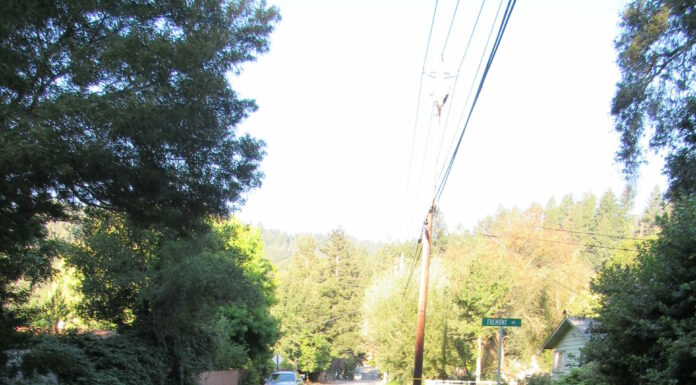
The Santa Cruz County Regional Transportation Commission this month selected 16 projects to receive $7 million in local shares of federal transportation funds.
Scotts Valley police receive $25K traffic safety grant
Scotts Valley Police Department has received a $25,000 grant from the California Office of Traffic Safety to support programs promoting bicycle and pedestrian safety.
The...