



20th Annual Environmental Town Hall
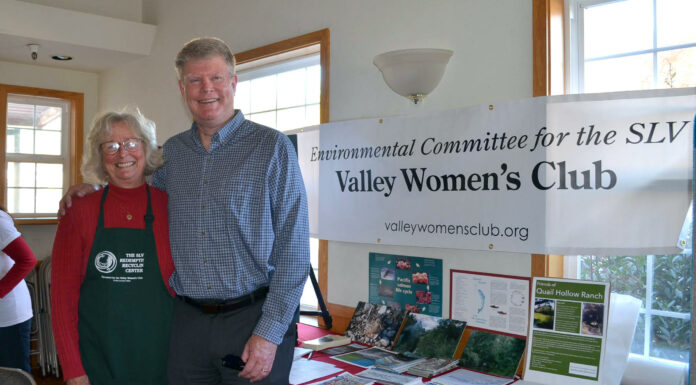
Felton Community Hall plays host to a variety of events each week. From Jazzercise classes to wedding receptions, the venue in downtown Felton has a history of bringing people together. And so it was that on Saturday, November 23rd, environmental organizations from around the county convened at the Hall for the 20th Annual Environmental Town Hall. Headed by the Valley Women’s Club and featuring guest speaker State Assemblymember Mark Stone, the symposium highlighted over 25 agencies dedicated to the betterment of our county’s environment. Groups like Friends of Santa Cruz State Parks, the Resource Conservation District and the Tobacco Education Coalition lined the interior of the building, providing handouts, graphs, charts and a reason to get involved, while nearly 200 attendees roamed amongst the tables, asking questions, networking, and getting to know the representatives of these organizations.After a brief introduction by Valley Women’s Club’s Nancy Macy, Assemblymember Stone took center stage, and spent an hour addressing the crowd on everything from the collapse of our recycling programs to the catastrophic failures of PG&E to serve its customers to the health and safety of our watershed.Stone’s remarks began by acknowledging that the San Lorenzo Valley has always been his political home base, and characterized his constituents as a source of support and grief as he acknowledged the vocality for which our residents are known. “I never lack for hearing from folks in the San Lorenzo Valley,” Stone said. “If only my colleagues in the Assembly would hear from the constituents the way I hear from you, then we would make better progress.”The two major topics covered in Stone’s address were the recycling issue and the PG&E debacle. In regards to recycling, Stone acknowledged that the recycling program had imploded, and was collapsing on itself. For years, China had taken the world’s trash, and was processing it into recycled materials like cell phone covers, shoes and electronics. Eventually, the overrun of materials being shipped to China was too much, and the country ceased accepting the millions of tons of plastic it had promised to take each year. With that shift, America was now forced to keep millions of recycled bottles and cans right here, and with no one being willing to purchase the materials, the redemption program came to a screeching halt. Despite the upset of consumers who now had no way to recycle their CRV (California Redemption Value) items, insult was added to injury with the continuation of the CRV fee being assessed upon every purchase of a qualifying item.“Where is the CRV money going if consumers aren’t getting it back?” asked one attendee. Stone said that Cal-Recycle was amassing the funds for now, and there was no immediate plan for how to siphon that money back into the end-users’ pockets. Mention was made of possibly suspending the CRV charge by the state, given that consumers were being forced to pay a fee that they had no way to recoup. Stone acknowledged that while the idea made sense, it would be impossible to institute under Cal-Recycle’s authority. He promised that the legislature is well aware of the issue, and is working hard to come up with a solution that would benefit consumers. “We are out of session until January,” Stone said, “but when we return, the recycling issue will be top of mind.”Following the recycling issue, Stone opened up the topic of PG&E to a round of hisses emanating from attendees. In covering the utility’s responsibilities and reviewing its failures, Stone pointed out the multiple ways in which PG&E was causing harm to its customers: Shutting off power when the weather didn’t warrant it; hiding reporting on the consistency and necessity of powering down ridge top lines unnecessarily; paying millions to its top brass and shareholders in bonuses while ratepayers suffered under antiquated infrastructure and lack of proactivity by the giant company, and continued plans to make weather-induced power outages a method of reducing the company’s liability while they remain in bankruptcy. Stone indicated that there were a few ways to bring the utility to task, including dissolving the giant corporation into geographically-centered agencies. Despite the positive response from the audience at the concept of breaking up the monopoly, Stone implored the audience to “be careful what you wish for.” Small communities like the San Lorenzo Valley have their rates tied in to larger metropolitan areas like San Jose and San Francisco. “If the Valley was to become its own customer without the subsidies provided by urban blocks, rates would skyrocket,” said Stone. He once again reminded the symposium’s attendees that upon return to work in January, Stone and his fellow legislators were planning to focus on this issue.A spirited Q&A followed Stone’s note-free presentation, and after an hour of hearing Stone address the crowd, incentivized attendees left with a little more information about the guardianship of our community.Christina Wise is a writer, reporter, and community advocate who resides in Felton. She writes for the Press Banner on housing, education, arts and culture. Contact her at christina@pressbanner.com.
CHP Capt. Ching bids farewell

While some retirees may sail off into the sunset, California Highway Patrol Capt. Aaron Ching is taking a new approach to that old adage as he prepares to paddle into the sunset.
Thanks to Neftali Espino of Honeymoon Surfboards and efforts by CHP staff, Ching...
Josh Howard: Where’s the Justice?

Josh Howard had a smile people remembered. Whether traversing the halls at San Lorenzo Valley High School, playing with his young sisters or boarding the bus to head to one of his three jobs, Josh had an upbeat attitude and an ear-to-ear grin. It was that smile, his mom Kelley says, that made Josh the light of her life. That smile shines no more, as Josh was killed in 2019. “I want the individuals of the court to imagine if this had happened to their child—that a local community member with a 20 year history in and out of jail for various criminal offenses drove intoxicated and reckless and killed their child.” (Victim Impact Statement (VIS) excerpt.) It’s with a grief-wracked voice that Kelley Howard recalls his memorial service, and tells of the many strangers who approached her that day to share memories of Josh’s positive impact on their own lives. She talks about how her young daughters, Charlotte and Lily, remember things like Josh’s favorite color (blue), or how he loved to play board games with Charlotte, and take Lily on walks. “They only have positive memories of him,” Kelley says, “and I’m so grateful for that.” Gratitude is tough to find when your only son is killed by another human being. Josh Howard was walking along Highway 9 in Felton when a vehicle driven by Jeremy Shreves crossed over the white fog line on the road. The passenger in the car tried to warn Shreves of Howard’s presence on the highway, but Shreves didn’t react as quickly as he should have—a meth-addled brain doesn’t work like a normal brain—and he hit and killed Josh instantly on February 21, 2019, his sister Charlotte’s fifth birthday. “Think of the absolute horror and despair…the unbearable pain that you cannot escape. Think of how you would feel, the guilt that you were not there next to your child, that they were alone.” (VIS) In the nearly 17 months since Josh’s death, Kelley has battled depression as she navigates the court and judicial system in the pursuit of justice and understanding. She has joined MADD (Mothers Against Drunk Driving), met with Assembly member Mark Stone and Supervisor Bruce McPherson; she’s spoken with CalTrans personnel about improvements for pedestrians along the Highway 9 corridor and received support from a victim’s advocacy group. In an effort to prevent a similar tragedy, Kelley has found her voice. “There’s not much I can do with the justice system,” she says. “I can’t change anything, but I need to protect other families and prevent anyone else from going through this.” “Now think how you would feel when you found out just four months after the death of your child this individual was again driving in your community while intoxicated. After knowing this fact, think how difficult it would be to see this individual walking around your neighborhood, free, without a care in the world. (VIS) On July 6th, Shreves was sentenced to seven months in county jail. Seven months. The District Attorney and public defender had made a deal, Kelley said, and though she knew what the elements of it included, it took her breath away to hear it said out loud. First, though, she read her victim impact statement to the judge. “Even with continued grief therapy, you will keep reliving this traumatic time in your life. This is my world.” (VIS) Jeremy Shreves is a known quantity in Santa Cruz County. He has a long county record—he’s been in and out of jail ten times in the last 20 years, and was charged with armed robbery in Santa Cruz about 15 years ago. Before killing Josh, Kelley says Shreves “hadn’t hurt anyone, but was a ticking time bomb.” After Josh’s death, Shreves was still out on the streets pending the results of the toxicology report. Four months later, Shreves got a DUI. “It’s hard to forgive him [for killing Josh] because he made that choice to drive intoxicated after the accident.” The drug results from the February accident came back in December—it took ten months to run his blood panel. Kelley was furious. “The Santa Cruz District Attorney kept checking in with the DOJ. The statute of limitations to prosecute Shreves was one year. The results from the blood panel showed that Shreves had meth in system,” Kelley says. On December 24, 2019, Shreves was picked up on a warrant—he had failed to show up for the second DUI hearing. “Releasing Jeremy Shreves back into the public allows the opportunity for another parent to lose a child. Jeremy has proven that he will drive on a suspended license while intoxicated even though he already took my child’s life. Where is the justice for Josh and our community? The justice system’s job is to protect. Releasing a habitual criminal so quickly after such a terrible and horrendous crime does not feel like proper justice or more importantly protection for the community. Habitual offenders are very likely to re-offend and I fear for the safety of my two young girls and this community. The system is failing in keeping our community safe.” (VIS) Shreves has been in jail since last December, charged with misdemeanor manslaughter in Josh Howard’s death. Misdemeanor manslaughter is synonymous with unintentional manslaughter—it’s killing without intent, so the penalty is greatly reduced. In Shreves’ case, his one year sentence was reduced by half. Jails that are prone to overcrowding generally offer time off for good behavior—as a result, Shreves will be released back into the community by the time this edition goes to print. And the kicker? Kelley says that because Shreves served over six months, he’ll have a credit for the next time he gets incarcerated. “I don’t believe time of sentencing should be shortened for “good behavior.” Not being problematic in jail does not change the fact that Jeremy Shreves’ choice and actions led to a crime that killed my son. How am I to live in my community with seeing him? How would you feel?” (VIS) Kelley says that if community members have suggestions on how to start to change our laws, she wants to be involved in that. “I don’t know where to start,” Kelley says. “I want to make a change and be a voice that is heard. We hear about jails being overpopulated and that’s not okay—we can’t just let people go free so they have the opportunity to commit more crimes. It shouldn’t take a death for things to change. Even with a death, nothing has changed.” Kelley is quiet for a moment. “I miss him no matter what. I want to tell his story and make a change for the better.” Next week: Part II, a deeper dive into criminal justice and sentencing guidelines.
Santa Cruz County Clerk Gail Pellerin retiring
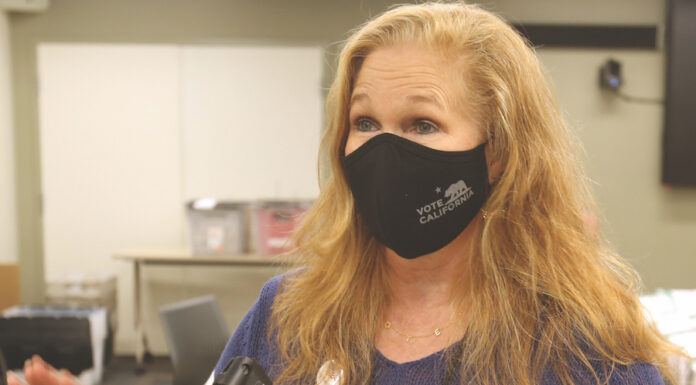
SANTA CRUZ COUNTY—After nearly three decades running the county’s elections department, Santa Cruz County Clerk Gail Pellerin will retire at the end of the year.
Pellerin made the announcement Thursday, a little more than a week after what many are calling the most significant election...
Quail Hollow Ranch: Volunteers keep up this local treasure
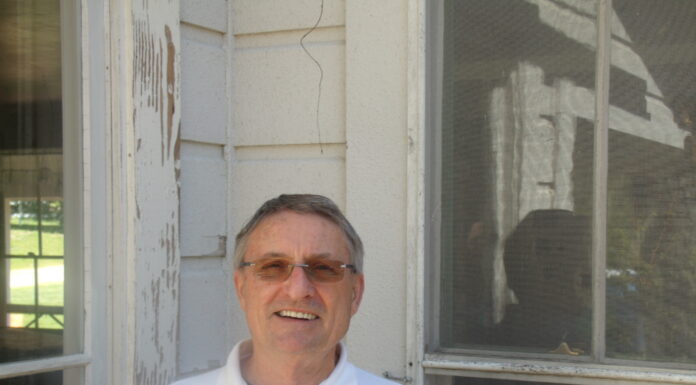
Who knew that in 1937 Lawrence and Ruth Lane, recent transplants from Iowa and the new owners and publishers of Sunset Magazine, also bought the Quail Hollow Ranch in Santa Cruz County that same year? Sunset Magazine and its publishing brand would go on to achieve great success in the decades ahead, and from the patio and kitchen of the Quail Hollow ranch house the Lane’s would develop many of the ideas that would later become famous as the “California lifestyle.”

Central Coast Good Fire Fair returns Saturday to Henry Cowell Redwoods...
California State Parks will host the third Central Coast Good Fire Fair and demonstration burn Saturday, Oct. 10, at Henry Cowell Redwoods State Park.
The...