



Damians Ladder helps Valley seniors in need

San Lorenzo Valley and Scotts Valley are chock-full of character and conveniences that most other towns would be lucky to have: breathtaking natural beauty, great schools, plenty of opportunities for shopping and dining, and cohesive, neighborly communities.
Residents work together, play together, celebrate holidays together...

Advocacy for Veterans in the San Lorenzo Valley
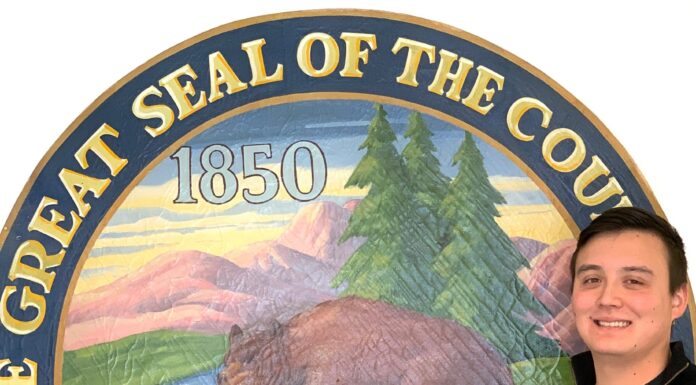
26-year old George Leece is a U.S. Army Veteran. He served from 2013 to 2017, including one deployment to Afghanistan, but after his four-year contract was up, Leece wanted to earn his bachelor's degree in electrical engineering. He enrolled at UCSC and decided to put his experience in the military to good use as a veterans' advocate. Leece joined the Veterans Service Office (VSO) as an intern two years ago, and in that time, he has represented all veterans of all ages and all eras. (The VSO is a county office, and they facilitate between the county and the Veterans Administration.) For a young man with a deployment behind him and his whole life ahead of him, Leece is an interesting mix of youth, knowledge, experience and a desire to do the right thing.
Unsung Heros: BC resident volunteering in Mexico and Baja

There are some wonderful people living here in Santa Cruz County. They give, they share, they smile, and then they give some more. Some of these unsung heroes, like small-aircraft pilot Bill Rush of Boulder Creek, have been using what once were weekend-getaways to set up free clinics in small towns in Mexico and Baja California to treat patients who otherwise wouldn’t receive medical and dental care.On one of those weekend getaways many years ago, Rush and his friends, increasingly cognizant of the harsh living conditions of the locals of whom they'd become quite fond, decided to do something about it. Since the only clinics available to these families were prohibitively far away, and their towns were not covered by any other organizations, Rush and fellow traveler Tom Hoganco-founded “Comunidad Para Baja California” with volunteer doctors, dentists and translators. Equipped with lawn chairs, flashlights, doctor’s satchels and a lot of good will, Rush and his passengerscame to incarnate the saying, “If the mountain won’t go to Mohammed . . .” Rush and his passengers each contribute $250 for gas and other traveling necessities and they head out on their “Mexican vacation”, to share the wealth, so to speak, with our neighbors to the south. Undaunted by the task at hand, with as many as a 100 people lined up since early morning, these long-awaited doctors from “el Norte” (the North) calmly treat one person at a time. Realizing the wisdom of the saying,”Give a man a fish and you feed him for a day; teach a man to fish and you feed him for a lifetime,”Rush and his dedicated volunteers go even further. They educate the parents and their children about correct dental hygiene, sometimes in separate tents, and sometimeswhile they’re standing in line. Speaking of education, one of Baja Comunidad’s most stirring successes has been their BECA Scholarship Program, which pays for indigenous children to go to middle and high school, since the Mexican government only provides education through the sixth grade. In 2008, at its inception, BECAsponsored 140 elementary-school students. The program has expanded greatly, sponsoring a total of 267 BECA students in 2017: 58 to attend college and 209 high & middle-school students. All of this has been accomplished through generous donations, where $150 pays for fees and other necessities for a student to attend the next school year. Baja Comunidadhas joined forces with local groups, and even the Mexican government, to provide essential infrastructural services to towns, benefitting the whole community. For example, they’ve brought potable water to entire towns, and built bathrooms and installed fans and heaters for schools. Rush’s non-profit organization has proven so successful that it’s still going strong fourteen years later, and it’s been having a wonderful trickle-down effect: the younger generation is even more interested in preventative care and in following a healthy lifestyle than their parents were. Rush explains, “These young people have seen the missing teeth in the smiles of their parents, and they don’t want to follow the same path. Some have cell phones and access to the internet, and they share with each other, developing new ideas of health & beauty. They want to learn from their parents’ mistakes. Baja Comunidad has room for new doctors, dentists and assistants. If you have time to volunteer, contact Bill Rush at 408-499-5088, or visit their website at www.bajacomunicad.org. To donate, contact Tina Hogan at 408-234-1080. Lyse Clivaz McGilvery is both a teacher and student with a passion for Boulder Creek. She can be reached at lysemcgilvery@yahoo.com.
Watering 101
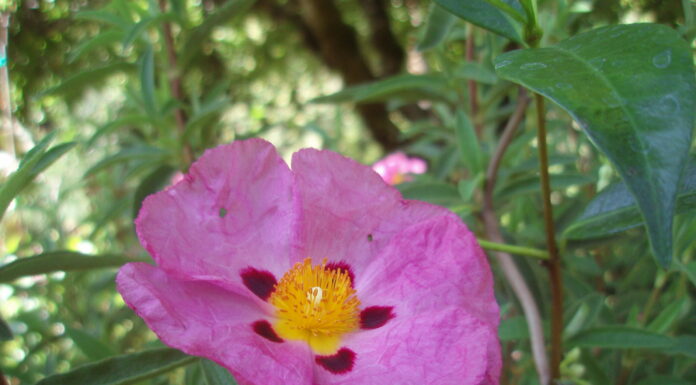
Is your garden starting to look a little bedraggled? After a few hot spells, have the plants in your yard gotten a taste of what’s to come for the rest of the summer? After your’ve chosen climate adapted plants how much water do they really need? Here’s how can you keep everything happy and not waste water. All plants need water- even those that are tolerant of our summer dry conditions. Water makes up 90-98% of every plant we grow. It's needed for photosynthesis, as well as reproduction and defense against pests. With summer water bills arriving this is a good time to re-visit how often and how much to water that landscape you’ve spent so much money to create. Basically, you’re wasting water if you’re not watering deep enough to moisten the entire root ball or if you’re irrigating too often. Photosynthesis is one of the most remarkable biochemical processes on earth and allows plants to use sunlight to make food from water and carbon dioxide. At temperatures about 104 degrees, however, the enzymes that carry out photosynthesis lose their shape and functionality. A garden that provides optimum light and water but gets too hot will be less vigorous. Plants have natural systems that respond to heat problems. Plants can cool themselves by pumping water out through the leaves for a kind of swamp cooler effect. They can also make “heat-shock” proteins which reduces problems from over heating. All these strategies can take resources away from a plant’s other needs like growth, flowering and fruiting. So how much water do different types of plants need during the heat of summer? Be sure that you water trees and shrubs deeply, checking soil moisture first with a trowel. Established small to medium shrubs should be watered when the top 3-6 inches of soil is dry. Water large shrubs and trees when the top 6-12 inches is dry. As a rule of thumb, trees and large shrubs need deep but infrequent waterings. They should be on a separate valve than your smaller shrubs and perennials. Water ornamental trees 1-3 times per month depending on the type and soil. Tree roots grow 12-36 inches deep and require 10 gallons of water per inch of trunk diameter. Apply water with a soaker hose, drip system emitters or hand held hose with shut off and soft spray attachment according to your water district’s restrictions. Don’t dig holes in the ground in an effort to water deeply. This dries out roots even more. Be sure to water the root zone to the indicated root depth every time you water. Watering deeper than the root zone only means you are wasting water. You can test how deep you watered by pushing a thin, smooth rod into the ground soon after you irrigate. The soil probe should easily slide through the wet soil but become difficult to push when reaching dry soil. The roots of smaller shrubs reach 12-24 inches deep in the soil. Established native shrubs may need only monthly waterings to keep them looking their best while other shrubs may need watering every 7-10 days during the heat of the summer. Perennial roots only go down 12 inches or so and may need watering once or twice a week depending on type. When is the best time to water? Watering in the morning is the most efficient whether you water by sprinkler, drip system, soaker hose or by hand because the water soaks deep in the soil without risk of evaporation. This bolsters the plant for the day and has dried from leaves by evening reducing the risk for foliar diseases like mildew. Plant roots are also more receptive to watering in the morning. Is it true that water droplets will scorch leaves in the midday sun? According to a study, fuzzy-leaved plants hold water droplets above the leaf surface and act as a magnifying glass to the light beaming through them so there is a very slight chance of scorch.The study also reported that water droplets on smooth leaves, such as maples, cannot cause leaf burn, regardless of the time of day. But no matter the time of day, a plant that needs water should get the right amount.
San Lorenzo Valley High School presents ‘Beauty and the Beast’

The Theater Department at San Lorenzo Valley High School is bringing a Disney favorite to the stage in March, and they’re excited to have you be their guest as they roll out “Beauty and the Beast” at the SLVHS Performing Arts Center (PAC).
Showing from...

News Briefs | Published Nov. 20, 2026
MBARD issues winter Spare the Air alerts
Monterey Bay Air Resources District began issuing annual wintertime Spare the Air alerts for the San Lorenzo Valley...