





Sheriff Hart working on community engagement

After discussing the accomplishments of his first term and the priorities of his second term as a guest speaker at the North County Democratic Club meeting last week, Hart’s campaign pitch made it clear why he believes he would be a very difficult candidate to challenge in a general election.
Photo exhibit shares stories of unhoused lives across the country

Upon entering the Faye G. Belardi Memorial Gallery at the San Lorenzo Valley Museum in Felton, the bright history of the San Lorenzo Valley is dwarfed by the panoply of photos reflecting the museum’s latest exhibition.
Photographer and writer Randy Bacon has compiled an eye-opening...
Inaugural Santa Cruz County Wildfire Resilience Summit arrives June 6

The FireSafe Council of Santa Cruz County is hosting the inaugural Santa Cruz County Wildfire Resilience Summit on Thursday, June 6, from 2-6pm at the Santa Cruz County Veterans Memorial Building, 846 Front St., in Santa Cruz.
The Summit’s goal is to inform and inspire...
Football jamborees on tap

The Santa Cruz Coast Athletic League’s season-opening football jamborees will be this weekend.
Growing and Using Herbs
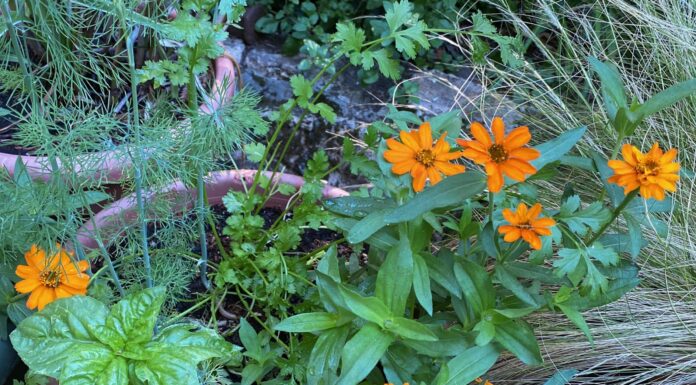
There are creative cooks who pair fresh herbs with their produce and other dishes and then there’s me who needs all the inspiration I can get to up my game in the kitchen. I have the basic herbs growing - Italian parsley, rosemary, basil, thyme and oregano - but I want to learn more uses for common herbs. I have used Italian parsley for lemon butter to drizzle on rosemary chicken. The oregano and basil goes well on a stuffed baked potatoes and poached salmon with mushrooms, marjoram, lemon thyme and a touch of mint is delicious, too. I forgot, I have lemon verbena which goes well with carrots, beets, corn, tomatoes and all types of fruit. I need to get some sage. It would pair well with beans, apples, tomatoes, cauliflower or potatoes. Other herbs that I need to add are cilantro, summer savory and tarragon. When shopping for herbs it's a good idea to snip a leaf and crush it between your fingers. Smell the essential oil. You'd be amazed how different herbs can smell and taste depending on the source of the plant. Thyme can smell like caraway, pine, camphor, lavender or turpentine. Rosemary plants can vary widely in taste depending on the source of the stock. You don't want to ruin chicken dinner by using the crushed leaves of one that tastes of pine or turpentine. Trim your herbs often to keep them bushy and productive. Fresh herbs are at their finest in summer as they peak in flavor and essential oils. Most herb stems can be cut and kept in a jar of water, out of direct sunlight, for a few days of use. I've even had basil send out roots in water. Nearly all herbs are perennial and can be grown from seed. Anise, coriander (also known as cilantro), dill and fennel should be sown directly in the garden as they do not transplant well. Parsley lives for 2 years then flowers and goes to seed. The flowers attract beneficial insects to your garden so leave them to do their work and start new plants to eat. The herbs that are annuals and need to be planted from starts or seed every year include basil, coriander, dill and summer savory. Although rust infects mints, very few diseases or insects attack herbs. Occasionally, spider mites may be found on low growing herb plants in hot, dry weather and aphids may attack anise, caraway, dill and fennel. Washing the foliage off early in the day helps in controlling mites and aphids. Here are some growing tips:Most herbs like 6-8 hours of full sun. Well drained soil is essential. If drainage is poor, work in plenty of organic matter or grow in raised beds or containers. Water regularly until the plants are growing steadily. Then most will need only occasional watering. Exceptions are basil, chives, mint and parsley which prefer evenly moist soil. Many herbs attract beneficial insects if they are allowed to flower. Fresh herbs are the most flavorful. The stuff in spice jars that you get in the store is often tasteless when compared to the real thing. When cooking with herbs, there is a general rule of thumb to keep in mind regarding the ratio of fresh to dry. Because dried herbs are often more potent and concentrated than fresh herbs, you need less. That means the correct ratio is one tablespoon of fresh herbs to one teaspoon of dried. Herb plants make beautiful ornamental additions to perennial beds and borders, too. Next week I’ll talk about how to harvest, dry and preserve herbs.

Fiber internet switched-on for rural residents in Santa Cruz Mountains

During a midday ceremony last Friday at the Summit Store’s parking lot, in the heart of the Santa Cruz Mountains, community members joined with telecom and government officials to celebrate the completion of the first phase of Surfnet Communications’ rural internet expansion.
Mark Morgenthaler, Surfnet’s...
Scotts Valley movie theater plans expansion

CineLux Scotts Valley Cinema might soon have the most movie screens in the county, if the owners of King’s Village Shopping Center carry out a plan to expand the theater from six to 10 screens with stadium-style seating and a wine bar.

News Briefs | Published Nov. 20, 2026
MBARD issues winter Spare the Air alerts
Monterey Bay Air Resources District began issuing annual wintertime Spare the Air alerts for the San Lorenzo Valley...