
The Fall Equinox and the Garden
The autumnal equinox happens on Saturday, September 22nd this year. It's the official start of fall when the sun crosses the celestial equator and moves southward. The earth's axis of rotation is perpendicular to the line connecting the centers of the earth and the sun on this day. Many people believe that the earth experiences 12 hours each of day and night on the equinox. However, this is not exactly the case.

Homelessness and Syringe Use in Santa Cruz County
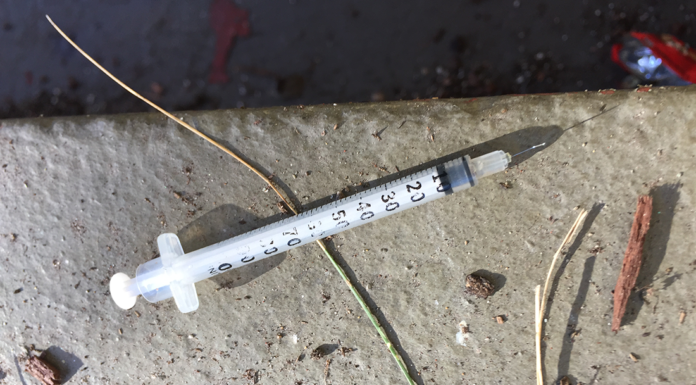
These past couple of months have ignited quite the discussion throughout Santa Cruz County. Between colder weather, the spontaneous reopening and closing of Ross Camp, the Harm Reduction Coalition’s proposals for new syringe exchanges, and the Santa Cruz County Syringe Services listening sessions, most dinner tables in our community are abuzz with this difficult topic. How can we best help, while limiting, the homeless population, syringe litter, and high rate of drug addiction in our county? How do we provide shelters and services for healthier injections, but not enable a surge without progress?
Wine-tasting 101: the four factors
Wine tasting is fun for any of a variety of reasons, but it becomes even more enjoyable when you are able to distinguish one wine from the next and speak about them with some intelligence.
Commentary: California’s schools are hurting
As state legislators missed the budget deadline at the end of June, six San Luis Obispo County school districts let state education officials know they may not be able to meet their future financial obligations due to California’s budget crisis.
Go for the fire station grant
We applaud Scotts Valley Fire Protection District’s plan to apply for a federal grant to build a La Madrona Drive fire station.
Mr. Money
Interest rates are the lowest they’ve been in human history, and they’ve been this low for almost seven years. On September 17, the Federal Reserve Bank, at long last, might raise its rate for overnight loans to banks – the Fed funds rate – from approximately zero to slightly above zero.They’ve been itching to raise rates for over a year now. Just last week, Federal Reserve board member, Dennis Lockhart said “the central bank is ready to hike.”I’m not convinced it will happen, but if it does, what effect will the increase have on residents of Scotts Valley and San Lorenzo Valley?Rising interest rates would be good news for savers, who would receive more interest on their savings. They would be bad for homeowners with adjustable-rate mortgages, because their monthly payments would rise. They also might be bad for home prices, as higher borrowing costs make it harder for buyers to qualify for a loan.The current ultra-low rates are the result of emergency measures taken by the Fed during the financial crisis of 2008. In an effort to prevent a depression like the 1930s, the Fed cut short-term rates to near zero to spur economic activity.That move was led by “Helicopter Ben” Bernanke, then chair of the Fed and so nicknamed because he once quipped that, if necessary, he would drop hundred-dollar bills from a helicopter to prevent another depression.Emergency measures aren’t supposed to last seven years. So Fed officials want to raise rates now, partly to show that their policy has worked.But has it?Well, the plan was to provide easy money to lift inflation – not too much, just enough to prevent deflation, or falling prices, like the U.S. experienced in the 1930s. However, low rates have had unexpected consequences:Inflation: The cycle is supposed to work this way: When the economy slows down, companies make less money and weak ones go out of business. When the economy heats up, the surviving companies can raise prices because of less competition. So inflation rises.But this long stretch of easy money has kept afloat weak companies that in a normal economic cycle wouldn’t survive, so they keep churning out supply and reducing inflation pressures. We’ve seen this in such industries as energy, mining and agriculture.Jobs: Easy money is supposed to encourage companies to hire. However, partly because of uncertainty about taxes and health care costs, companies have been reluctant to hire, instead they borrow cheap money to buy back their own stock and the stock of other companies. When companies merge, they lay off workers.The very low jobless rate of 5.3 percent reported a week ago doesn’t count people who have stopped looking for work or are not working as many hours as they want. The percentage of adults in the workforce remained very low at 62.6 percent.But the main reason interest rates aren’t likely to rise much in the near future is that the economy can’t handle it. In the last seven years, the federal debt has ballooned from $10 trillion to $18 trillion. The U.S. is paying an average interest rate of 1.5 percent on that debt.If the average rate rose by 1 percent to 2.5 percent, still very low historically, that would add $180 billion a year in borrowing cost. The government nearly shut itself down twice in recent years because lawmakers couldn’t find $30 billion in spending cuts. How on earth could we afford an extra $180 billion?My guess is that interest rates will stay low, at least for now.Mark Rosenberg is a financial adviser with Financial West Group in Scotts Valley, a member of FINRA and SIPC. He can be reached at 831-439-9910 or mrosenberg@fwg.com
Let’s go fishin’: Winter fishing prospects mixed as steelhead wait for water
We have had great winter weather for humans, but a little more rain will be good for the fish. The San Lorenzo River has had extreme low flows for the month of January and, so far, most of February.
Boulder Creek gains federal Opportunity Zone status
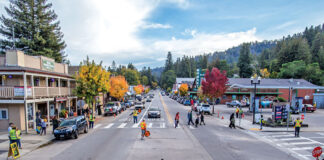
Boulder Creek has received a federal Opportunity Zone designation, opening new opportunities to attract private investment, support local businesses and strengthen the community’s long-term...