
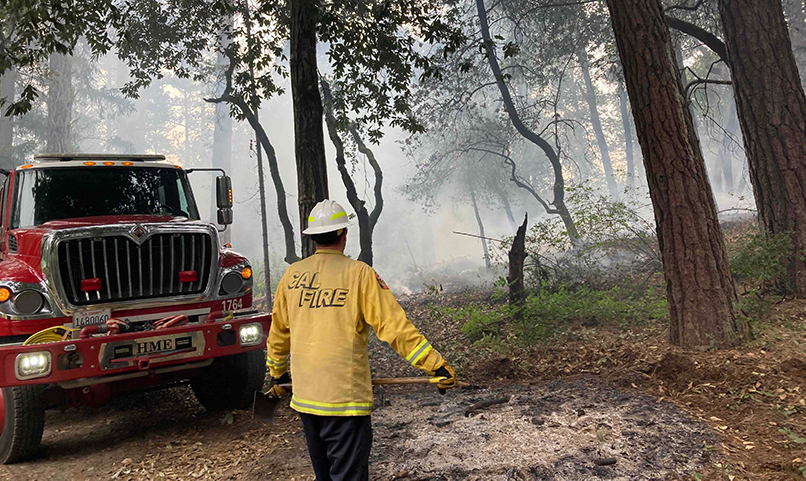
Scott Weese, a division chief with Cal Fire CZU, spends plenty of time pouring over forest-fuel-environment maps and briefing safety crews on weather conditions.
The fire behavior analyst has been paying close attention to the scorching temperatures that broke records in March across California, but he’s not too worried about the potential for wildfires just yet.
“This is historic weather,” he said March 20 in a phone interview, but added, “The grass isn’t dry; the duff still has moisture in it.”
In fact, he added, Cal Fire crews have been making progress burning the piles of forest debris that have been diligently collected around the area and awaiting a light, so they can be eliminated from the landscape in a controlled manner.
“For the pile burning, it’s been pretty good,” said Weese, when asked for a prognosis. “We don’t want ladder fuels into the bigger trees, so we take out the smaller stuff.”
Thankfully, there was enough rain—and even some snow—in the coastal mountains this winter to mean the peaking thermometer has actually spelled a benefit, at least so far.
“We’re not allowed to burn if there’s visible moisture in the piles,” he said. “Because of air quality reasons, you want to make sure the piles are dry.”
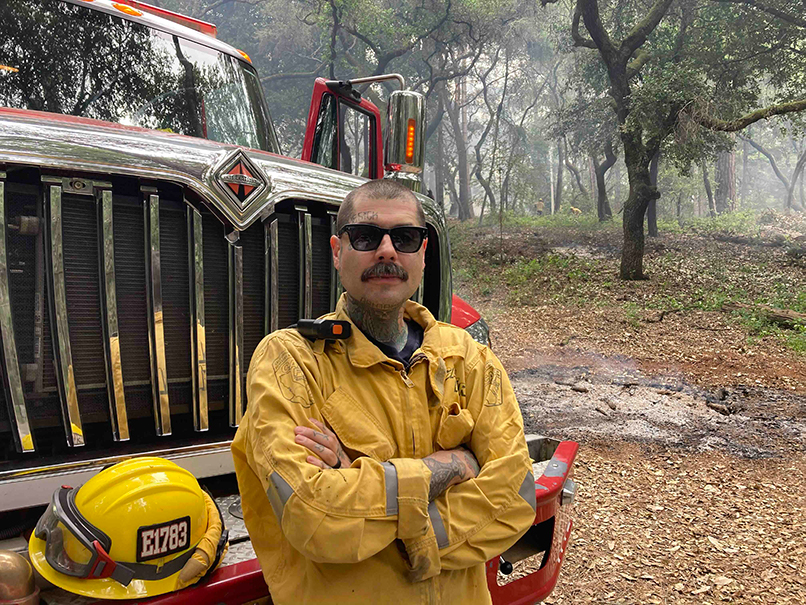
The inmate firefighters, based out of Ben Lomond, as well as the Glenwood Firefighter 1 “hand crew”—which recently moved into new digs in La Honda—have been on-task, Weese said, adding they also have engines at Felton, Santa Cruz and Jameson Creek (Boulder Creek) stations that do fuel reduction work.
While the priority in the summer is raining and responding to wildland fire, in the winter pretty much all “Type 3, Schedule B” backcountry engines will be assigned fuel reduction tasks.
Cal Fire has also been moving forward with forest health projects at the Soquel Demonstration State Forest, which has meant prescribed burns there over the last couple months.
“The biggest driver of a wildland fire is going to be wind. So, that’s what we’re going to be worrying about,” he said.
The grass crop throughout the state has seen exceptional growth this season, added Weese, noting these “herbaceous fuels” are now “taller and thicker than usual.” And when that dries out, that could become another risk.
Nevertheless, just enough dampness has meant the May 1 burn deadline can stay, fire authorities confirmed.
“State Parks, they have 100s of piles they were trying to burn,” he commented.
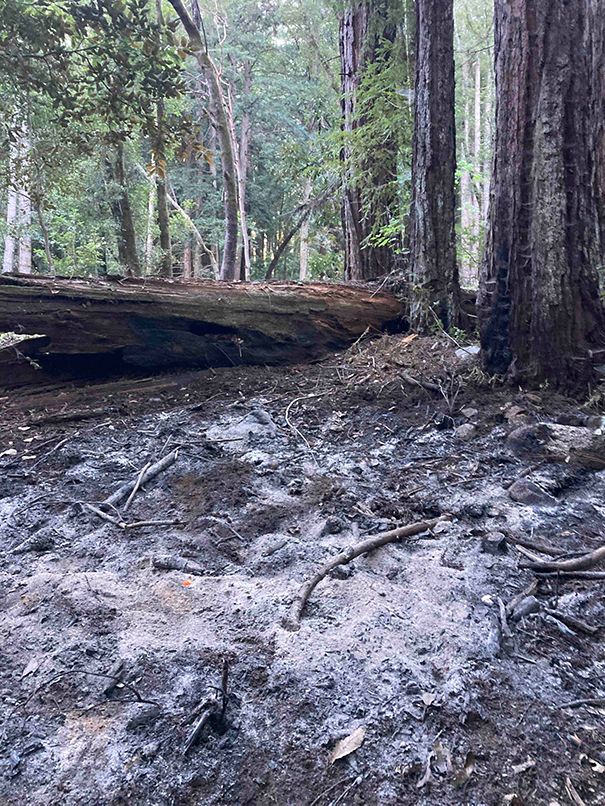
The Press Banner spoke with Portia Halbert, a senior environmental scientist at the California Department of State Parks, to get a sense of how things look from her perspective.
They were aiming to torch 400 burn piles across the region in places like Big Basin Redwoods State Park, Castle Rock State Park and Henry Cowell Redwoods State Park (including the Fall Creek Unit)—by the end of April.
As of March 23, Halbert said there were still 95 piles left to go at Big Basin, 260 piles at Fall Creek and 60 piles at Butano State Park.
“Air Quality prohibited us from burning our piles on what were burn days because the piles were ‘too wet.’ I would have already burnt the Fall Creek and Big Basin piles if it wasn’t for this setback,” she said. “It’s not as ambitious as other years. In general, across parks we are facing a deferred maintenance issue with these treatments. So, our aim is to get a lot burned, and that basically depends on how much work got done building piles, acres of forest restoration, doing shaded fuel breaks, etc.”
Conditions were too wet before, but they quickly became too hot.
“We couldn’t really burn the last several weeks because of the heat; with more heat limiting our ability to burn, yes we could face a situation where the piles don’t get burned,” she said. “I’m always feeling like I’m in a race to burn as much as I can when I can (that is primarily limited by when the conditions are right). As I mentioned, pile burning has been limited by the air district saying the piles could not have any discernible moisture, which limited winter time burning.”
Halbert said State Parks can generally get a burn permit outside of the normal schedule—but only if weather allows.
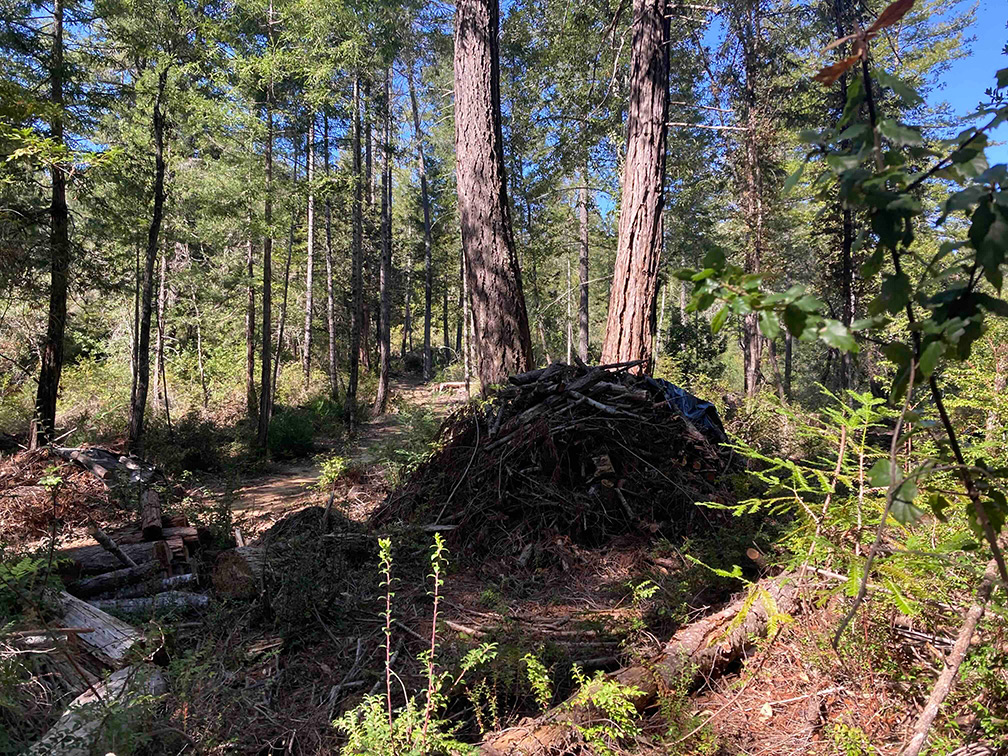
“The cutoff dates are driven by when conditions are safe to burn, and I am interested in being safe, so no real issue there,” she said, adding there are “few opportunities left” to take care of the burn piles.
At that point, she was gearing up to burn the Fall Creek piles. Halbert said she tries not to worry, stating pile burning is sort of “like paying on a debt you may never owe.”
When State Parks recently sought to complete fuel reduction work in Butano, it ran into issues around relative humidity.
“It was predicted to hit 30%, but normally you hit your predicted low at 2-4 in the afternoon, not before 10am,” exclaimed Halbert, noting that the NOAA weather forecast suggested that rain was on the way for the following week.
“I am hoping to burn the piles at Big Basin,” she said, adding she wants to make sure to burn those while rain is falling. “We’ll see whether air quality approves my ignition request.”
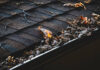
Both Weese and Halbert urge local residents to take matters into their own hands by doing vegetation clearance around their own homes to create defensible space, including cleaning out gutters and getting started on other home-hardening projects.
Since these interviews, Cal Fire has been burning along Graham Hill Road, and State Parks has been scheduled to proceed with pile burning in Big Basin State Park.