

How efficient is your reaction time? Think back, when was the last time you tripped but caught yourself from falling. Did you know your nervous system has a millisecond to react the right muscles to prevent a fall when you trip. If that signal travels too slowly, the window of your reaction time is missed and that’s how falls usually happen.
Reaction time includes the ability to quickly respond to unexpected changes or disruptions in movement, such as catching yourself after stepping off a curb, recovering from a misstep, moving away from an oncoming object, or initiating a physical response to prevent injury.
Reaction time affects more than just the risk of falling, it also plays an important role in how we move and how confidently we navigate our environment. When reaction time slows, individuals may begin to limit their activities out of fear of falling or being unable to respond quickly enough. Over time, this can lead to a more restricted, scaled back lifestyle and less engagement in activities they once enjoyed.
So, how can you improve your reaction time and maintain a high quality of life? It starts with strength training and balance work.
A strong lower body and core improve balance, stability and your ability to react quickly. Build from the ground up by strengthening the muscles that help you move with control and agility. Strength training doesn’t just build muscle, it also enhances proprioception, your body’s awareness of its position and movement in space.
As you train, you stimulate sensory receptors that create a feedback loop between your muscles and brain, improving coordination, balance and movement control over time.
Here are a few foundational exercises to build lower body strength, stability and quickness.
Single Leg Stands
Stand near a wall or chair for support if you need it. Lift one foot off the ground and hold your balance on the other leg for 30 seconds. Switch legs. 3-5 times each side.
Static Lunges
Step one foot straight back into a staggered split stance. Keep the rear heel lifted and stacked over the ball of the foot. Engage your core and keep your chest facing forward. As you lower down, bend both knees simultaneously. Hold position a sec then come back to a stand, maintaining your position. 10 times each side.
Heel-to-Toe Walk
Walk in a straight line, placing the heel of one foot directly in front of the toes of the other foot, so they touch. Take 10 to 15 steps forward, then turn around and walk back.
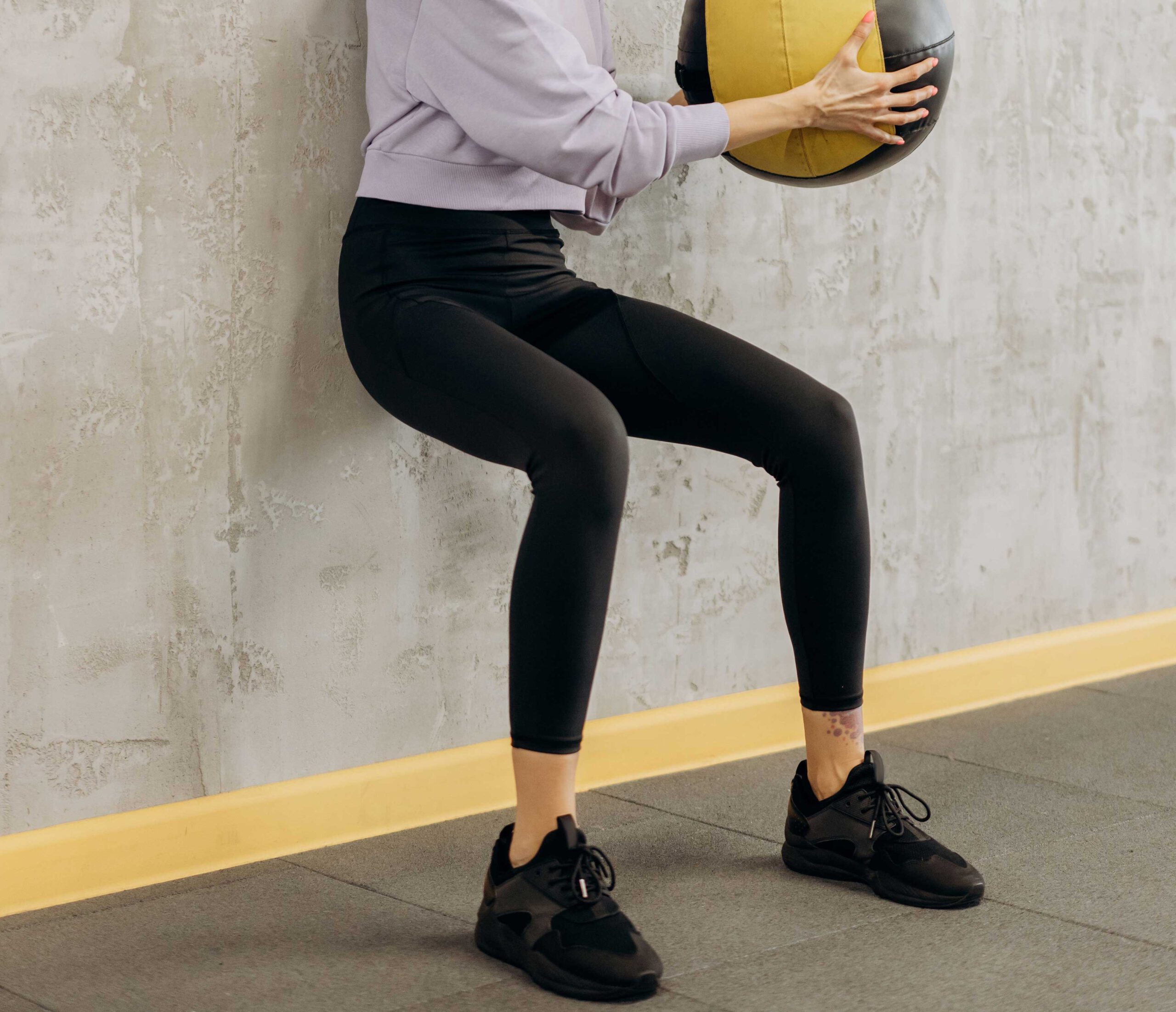
Wall Sit
Place your back flat against a wall. Feet shoulder width apart. Lower down to a squat and hold position for up to 30 seconds.
Ashley LaMorte is a nationally certified fitness instructor and has been in the fitness industry for many years. Over the years, she has gotten the opportunity to instruct group X boot camps at gyms and train private clients from all walks of life, all over the Bay Area. She now has her own mobile fitness business LaMorte Lift. Learn more at LaMorteLift.com.