
When the CZU August Lightning Complex Fire tore through the Santa Cruz Mountains in August 2020, homes and their residents weren’t the only things impacted and destroyed by the heat, flames and airborne embers; Big Basin Redwood State Park was largely damaged, burning 97% of the park, including the destruction of park facilities and infrastructure in the 18,000-plus acres it holds.
While the park reopened to limited use in 2022, several local groups have been working to reimagine the rehabilitation of the park since the fire, and on July 3, the efforts of those teams resulted in the California Park and Recreation Commission approving the project with a full-throated endorsement.
Members of those groups, including Save the Redwoods League, Sempervirens Fund, Mountain Parks Foundation, Parks California and Friends of Santa Cruz State Parks participated in a half-day field trip of the park’s points of interest on July 2, along with the commissioners.
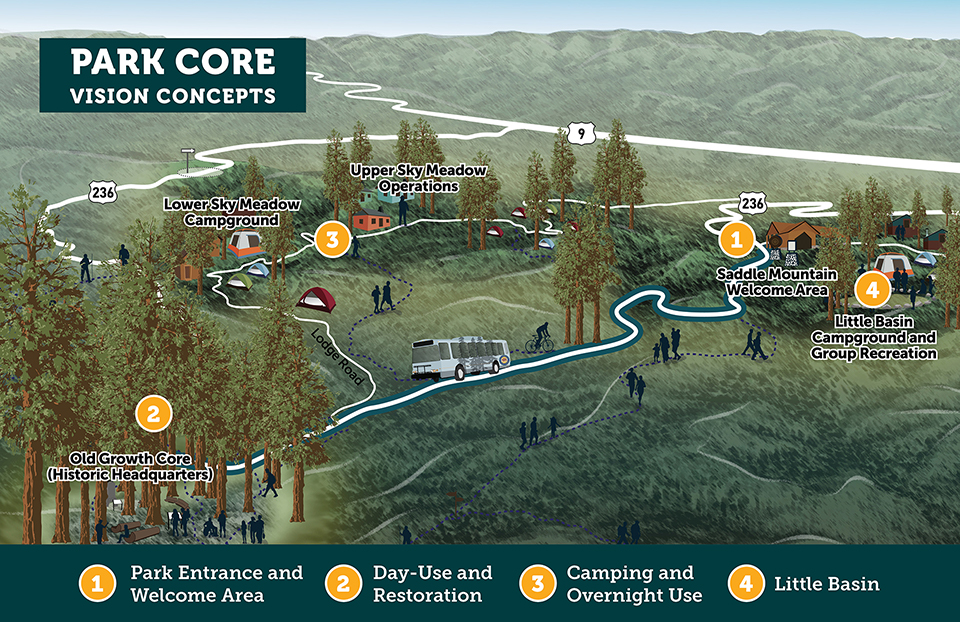
Participants toured areas of the park that had been left unusable due to the fire, and were treated to maps, site planning and design concepts for the reimagined park, including new drive-in and hike-in camping locations, improved infrastructure and interpretation centers to provide educational opportunities to schoolchildren, campers and nature lovers alike.
One of the biggest wins for the park was the under grounding of power lines by Pacific Gas & Electric. As local residents know, PG&E is not prone to spending money in favor of preserving neighborhoods, so the fact that representatives of California State Parks were able to convince the utility to bury 5-10 miles of lines underground to prevent future issues (sparking lines resulting in wildfires and tree thinning due to the existence of above ground cables) was a huge feat for the safety of the park.
According to Sara Barth, executive director of Sempervirens Fund, additional elements of the park’s rehabilitation include prioritizing forest health, thoughtful facility design with the new Saddle Mountain visitor center and headquarters, a shuttle system, equitable access and inclusive design, honoring indigenous perspectives and focusing on climate resilience and emergency preparedness.
The July 3 vote by the California State Parks and Recreation Commission saw the results of that tour come to life in a resounding success for the agencies who had worked tirelessly to plan for the park’s reimagining.
“I’m so happy that all the hard work reflected in getting to that point was recognized, and that the commissioners voted to move forward. I know that it was a huge effort and a labor of love, and the excitement is just growing,” said Brenda Holmes, executive director of Mountain Parks Foundation. “Now, one of our roadblocks is removed, and we’re ready to work towards restoring this park and heading into the future.”
The future may be 5-10 years out for completion of the reimagined park, but that doesn’t faze Holmes.
“The general answer to this question of a timeline is ‘longer than anyone might hope or expect,’ but we’re all in it for the long haul,” Holmes said.
As written by Barth in an address to the commissioners, “Big Basin Redwoods State Park is California’s first state park and one of the most beloved public landscapes in the state. The Facilities Management Plan charts a thoughtful, responsible path to rebuild the park in a way that puts the health of the old-growth redwood forest first, welcomes all Californians, and sets a new standard for climate-resilient park planning.”
For more information on the reimagined Big Basin Redwood State Park, visit reimaginingbigbasin.org.