

Free Teen Webinar- #dontkillgrandma
COVID-19 cases are surging both nationally and locally, and young people aged 18-34 are a major reason why. Did you know that between July 12-20th Santa Cruz County had over 200 new cases, the highest yet? Over half of those cases were in 18-34 year olds, so obviously we aren't getting the message. The Santa Cruz County Business Council is partnering with Santa Cruz Works, the Small Business Development Center at Cabrillo College, and the Community Foundation of Santa Cruz County to host a special, virtual town hall aimed specifically at 18-34 year olds with our County Health Officer, Dr. Gail Newel, and UCSC Professor Marm Kilpatrick, who is an expert on infectious diseases. The virtual event is taking place Wednesday July 29th from 6-7:30pm, and will feature a current update on COVID in Santa Cruz, an overview of how you can still have fun with your friends SAFELY, and a question and answer session from the front line experts. Those who RSVP via Eventbrite will automatically be entered to WIN a Merge4 Mask after the presentation has concluded. We have 120 to give away! Must be present at the end of the event to be eligible. And, you must be able to get to our location on Pacific Ave to pick up your mask. These stylish cloth masks will keep you both in vogue and safe during this pandemic. As young people we sometimes feel invincible, and it's true that COVID is hitting older people much harder– but even if you don't wind up in the hospital reliant on a ventilator to breath, you can still spread the virus to the most vulnerable in our community. It's time for us to step up and take responsibility for stopping the spread. You can still have fun (!), and you can still see your friends (!!), but just stay outdoors and keep six feet away from each other. If you have to get close or go inside, wear a mask and limit that time as much as possible. DO THE RIGHT THING. #stopthespread #dontkillgrandma
Santa Cruz County Placed on Monitoring List
Based on increased spread of COVID-19 and in order to protect the
Winning Hearts and Awards
RJ Kindred is the kind of person you want to be when you grow up. A determined athlete and dedicated community member, he has woven his way through a lifetime of education in the San Lorenzo Valley, and emerged from the other side with an eye on serving his community. It’s this spirit and determination that resulted in Kindred ending his senior year in high school with not only a diploma, but a raft of awards and scholarships. Each is meaningful to the SLV grad, but his heart was most moved with the award of the Jack DeBord Memorial Scholarship. The $20,000 gift ($5,000 over four years) means that Kindred can pursue his goals of working in the fire service, but it means so much more than that to this well-spoken young man. “I knew Jack on the football field,” says Kindred. “He was a hard-working kid that everyone liked and respected. When we were doing our summer training for football, we’d all work out together, but then the coaches would split is up into our positions on the team. Jack was going to be the starting JV football quarterback, and I was lined up to be the starting varsity quarterback, so we worked together pretty closely. He was just an awesome kid—smart, funny, driven, super hard worker. Everyone loved him.” At the first home football game at SLVHS with Scotts Valley High School in August of 2019 following Jack’s death, SLVHS Principal Jeff Calden read the following statement: “Our two communities shared a loss this summer, and we want to recognize that Scotts Valley resident, and San Lorenzo Valley High School student athlete, our friend, Jack DeBord, isn’t here with us tonight. We lost Jack to suicide in June, and to those students who are here tonight, know that you are loved, that there is no shame in asking for help, and that each of your lives is meaningful.” Those words were shared again in the presentation of the scholarship to Kindred in a video that can be found at https://youtu.be/Bf2jG7uXDxA. Jack’s parents, Katalin and Jim, were both pleased that Kindred was the inaugural recipient of the scholarship. “After Jack’s death, it very quickly became apparent to my husband that he wanted to do something to honor Jack and bring awareness to suicide prevention. We couldn’t have been more caught off guard by Jack’s decision to take his life. Our faith in Jesus Christ is the only thing that is sustaining us through such a devastating loss.” Indeed, the family has embraced Romans 8:28: And we know that God causes all things to work together for good to those who love God, to those who are called according to His purpose. “This is a reflection of the Lord taking an awful situation and bringing good out of it,”says Katalin. “Jack had the world by the tail,” says Jim DeBord. “He excelled at everything he ever tried. He had a long list of outstanding accomplishments, but his character was at the top.” The DeBord family worked with the Community Foundation of Santa Cruz County (CFSCC) to establish a scholarship in Jack’s name. “We had three things in mind after Jack’s death,” says Jim. “We wanted to be bold in our faith, highlight suicide awareness and prevention, and keep Jack’s name alive, so we set up this scholarship to honor him and benefit the community. He was super attached to the SLV community,” says Jim, his voice cracking. “Our only parameters for the recipient were that the winner had to be an SLVHS senior and a student athlete,” says Katalin, “and we’re really grateful that RJ was the awardee.” Jim is equally pleased. “I saw the video published by CFSCC naming RJ as the recipient, and it was unbelievably moving. RJ’s statement regarding Jack is a testament to our son’s character.” It came as a tremendous shock to Kindred, and the SLVHS football family, when DeBord committed suicide in June of 2019. “It was just a really bad time.” The recollection of those times may be part of Kindred’s drive to serve his community in the fire service. Kindred spent two years in the Boulder Creek Fire Department’s Internship Program (participants must be in their junior or senior year of high school), and walked away with invaluable lessons that he hopes to apply to his line of work. “I’m going to start Cabrillo in the fall, and then, I want to transfer to a four-year college in Idaho or Montana and pursue a degree in fire science, and I want to come back here and work as close to the valley as possible. This is my home.” A portion of Kindred’s winning essay for the DeBord scholarship: “This past summer a friend, teammate, and someone that pushed me to be my best every day, passed away. He was only fifteen years old and he took his own life. His name was Jack Debord. He was the quarterback of the JV team and I was the quarterback for varsity. He was only a sophomore, but he was incredible. Everything he did was effortless and perfect. Nobody knew how he did it. When he threw, the ball had the tightest spiral and his powerful clean form was flawless. He was extremely special and [I wish] he knew the impact he had on me and everyone around him. For our football team, we…have workouts [where] we go against each other and compete for time or reps. One…time he beat me and our head coach came over to me and said, “Jack is beating you!” and told me that he was better than me. That right there lit a fire under me and pushed me to a new extreme. That off-season extra work helped me become 1st team All League Safety and MVP of our school team. He not only affected people in the weight room but also on the field and at school. He is the kind of kid everyone wants to be and be around. Jack had the smarts, the athletic ability, and the perfect relationship with his friends and girlfriend. He was something out of a book or movie.” If you would like to contribute to the Jack Debord Memorial Scholarship fund, contact the Community Foundation of Santa Cruz County at cfscc.org.
The Athletic Girl, Part II
The Piping Rock Horse Show, a main event on 1911’s fall social calendar, attracted horse lovers from many of Long Island’s country estates. The judging of thoroughbreds was accompanied by field events for men and women.
Funding Empowerment
Beginning the week of July 20th through August 14th, black youth throughout the county can take part in an empowerment workshop put on by Chloe Gentile-Montgomery, a 2017 Santa Cruz High School graduate. The program will give black youth the opportunity to learn about black history, building community, and meet other community members over Zoom for four weeks.
Roaring Camp, Getting Back on Track
Walking through the grounds of Roaring Camp Railroads in Felton, one is met with the sights and sounds of a family-friendly environment. Youngsters blow wooden train whistles as they chase each other through the grass. Families enjoy a picnic lunch at the wooden tables, and couples walk hand-in-hand over the bridge past the pond. And yet…and yet. Masks are in abundance, and are now a requirement to visit the historical site that began carrying tourists to the top of Bear Mountain, and down to Santa Cruz, in 1875. Hand sanitizer dispensers dot the area, and present-day signage (made with an appealing rustic look) reminds visitors of social distancing protocols.It’s been a struggle to reinvent this tourist attraction in the Covid-19 era. It was necessary to cancel events, reduce train ride bookings to allow for social distancing, and disallow vendors whose livelihoods depend on barbecuing lunches, painting faces or turning visitors into cartoon works of art. Roaring Camp finally opened up about a month ago, and the tourists started to return.Leatha Brown is a sales coordinator and events manager for Roaring Camp. She’s been with the company for seven years, and sees the impact of Covid-19 on the business. “Everything’s been canceled—all of our weddings, corporate, group and team building events—you name it. Some weddings have been tentatively rescheduled for the fall, but we’re still in a holding pattern. We have legacy events that happen here—Day Out with Thomas, the Redwood Mountain Fair, the Sol Fest, the Food Truck Challenge, the Saw Music Festival—that have all been canceled.” So how does a business that relies on so many large-scale events remain solvent in a pandemic economy? “We just recently started running our steam trains again, and our beach train on the weekends. We can’t operate at full capacity; we’re down from 200 seats per train to 70 seats to allow for social distancing. 2021 will be our 60th year of operation, and we’re hoping we can celebrate that anniversary with the community.” Brown says staff was furloughed when the virus first appeared in Santa Cruz County, but with the PPP loan (Paycheck Protection Program from the Small Business Administration), there haven’t been any layoffs. The other saving grace for Roaring Camp employees has been the awarding of the Great Plates program by the County of Santa Cruz. A total of five local businesses (Back Nine Grill and Bar, Johnny’s Harborside, Pearl of the Ocean, Swing Time Catering and Roaring Camp) were selected by a committee to deliver over 1,000 healthy meals to seniors each day, and employees are paid through a federal economic stimulus. “There are a lot of seniors who haven’t left the house since the pandemic took hold, and some say it’s the only meal they have all day,” says Brown.As we meander through the grounds, Brown points out the number of precautions that staff are taking to protect visitors and employees alike. “We have signage everywhere, and we wipe down every part of the train between each departure. You’ll also find staff regularly disinfecting bathrooms, picnic tables and all touchable surfaces.” I mention the additional expense that the business must have incurred from the virus; Brown nods. “We have literally spent thousands of dollars on signage, masks, gloves and cleaning supplies. We also have a check-in station at the entrance by the bridge where staff ask a series of questions before guests are allowed in. It’s been a major transition for all of us.”Phil Reader, engineer and steam engine fireman (note: not firefighter), has been working on the railroad for 40 years, and became part of the Roaring Camp family in 1979. He’s seen the impact of coronavirus on his beloved hometown railroad. “We used to see a lot of people out here recreating, and now they can’t. It’s been kind of depressing,” he says.Donnie Sage has been a Roaring Camp conductor and fireman for six years, and is rolling with the changes brought on by pandemic. “Most people are just happy to be out of the house and on the train,” says Sage, in between announcements aboard the Bear Mountain steam train such as: • “Redwood trees get 40% of their annual moisture from coastal fog.” • “The traditional whistle signal for approaching a crossing is Morse Code for “Q” which was commonly used in the UK to announce the approach of the queen.” • “Redwood root systems are as long as the tree is tall.”While steaming our way up the 8.5% grade to the top of the mountain, Sage asks how many people are from out of town. Some hands go up, with the majority belonging to a group of eight people from Ft. Lauderdale. “We’d had this trip booked for two years, and we weren’t about to miss it,” says Lori Freeman. Aware that Florida has had skyrocketing infection rates of 10,000 - 15,000 new cases per day, the railroad’s efforts at social distancing and disinfecting are particularly welcome.“We don’t know when things will open back up again, but we can’t wait,” says Brown. “We’re aware that it depends on the governor and the county, and we’ll be relieved when we can get back on track.”She took the words right out of my mouth.
Container Gardening and You
When I moved up here to Bonny Soon from Felton I brought several hundred plants figuring that with over 2 acres of land I could put most of them in the ground. Many trees and shrubs did get planted but then I ran out of appropriate planting spots and just kept the rest in pots to create a container garden. Naturally, I’ve added more plants in pots ‘cause I just can’t help myself when I see a colorful plant that will attract birds, bees and butterflies. My current count of potted plants is 253 so I’ve learned a thing or two about container gardening. Mixed plantings in containers are the most dramatic with a thriller, some fillers and a spiller or two but when I look around that’s not what I have the most of. Many of my large pots have trees like Dawn redwood, Japanese maples, flowering plums and cherries that I’ve had since the early ’90’s so I might underplant them with chartreuse sedum ‘Angelina’ or moneywort for a little color but that’s about it. I’ve found that even large trees and shrubs can survive in the same container for many, many years without root pruning or transplanting if they are fertilized once a year and watered thoroughly as needed. In choosing a container, remember a porous clay pot will dry out fast in the summer sun as will a small pot. If you want pots on a sunny deck, you'll have better results if your container is made or ceramic or colored plastic and is big enough to allow 2 inches of potting soil around the root ball. I don’t use water absorbing polymer granules in my containers as they are all in shade in winter and would stay too wet depriving plant roots of oxygen. Water when the top 1 inch of soil in the container is dry. On a very hot day, watering mid-day will cool the soil although I like to get my watering done early. Get to know your plants. Plants that are still growing into their containers need less frequent watering than those that are getting root bound. How much water? Water until it runs out the bottom and empty the saucer the next day if any water remains. Use a gentle nozzle that doesn't dislodge the soil or compact it. Also make sure the water in the hose isn't hot from lying in the sun. Plants in containers are watered frequently and the water draining out of the bottom carries away nutrients. That said I have found that I can fertilize everything once a year with an organic all-purpose fertilizer like True 4-4-2. Blooming plants like abutilon, fuchsia, orchids, angel trumpet and the lantana, which I grow because the chipmunks don’t nibble them, receive a water soluble fertilizer once a month. Water soluble fertilizers are fast acting. Dry granules and time release capsules last longer. Organic fertilizers tend to work more slowly and are especially ideal for trees, shrubs and long lived perennials or for large planters in which you keep the same soil from year to year. Be sure plants are moist before feeding. The best fertilizer is the one that you get out of the package and onto your plants. Be sure to use a quality potting mix in your containers. There are special succulent and cactus mixes available but succulents are forgiving as long as the soil drains freely. Don't add gravel or clay shards at the bottom of the pot as this impedes drainage. It works best to fill the entire pot with soil, top to bottom with a screen over the hole to keep out earwigs and sowbugs. You can grow anything in a container. Think of them as furnishings. Grow herbs and other edibles near the kitchen door, fragrant flowers to attract beneficial insects, hummingbirds and butterflies, California natives or even plants that glow in the moonlight.
CARE-ing for METRO
On July 9th, the Santa Cruz METRO received a 20.6-million-dollar grant from the Federal Transit Administration, as a part of the CARES Act. Throughout the COVID crisis, METRO has provided vital and safe transportation for essential workers that otherwise would struggle to reach work. Despite their great contributions to our community, a lack of funds has pushed the bus service into a perilous financial state. Alex Clifford, the CEO of METRO, was greatly relieved for the funds, “First and foremost, we’re really grateful to Congress for providing economic relief to METRO early on with COVID. It was incredible foresight. So often you wait until it’s a problem to come up with a fix, but they have already provided a bridge to sustain service as much as we can throughout this crisis. For now, this will help us stave off service reductions and layoffs.”
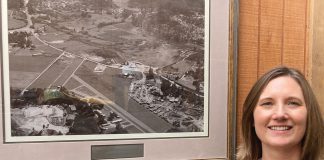
Scotts Valley City Manager Mali LaGoe announces resignation
The City of Scotts Valley announced today that City Manager Mali LaGoe has submitted her resignation after more than four and a half years leading...