

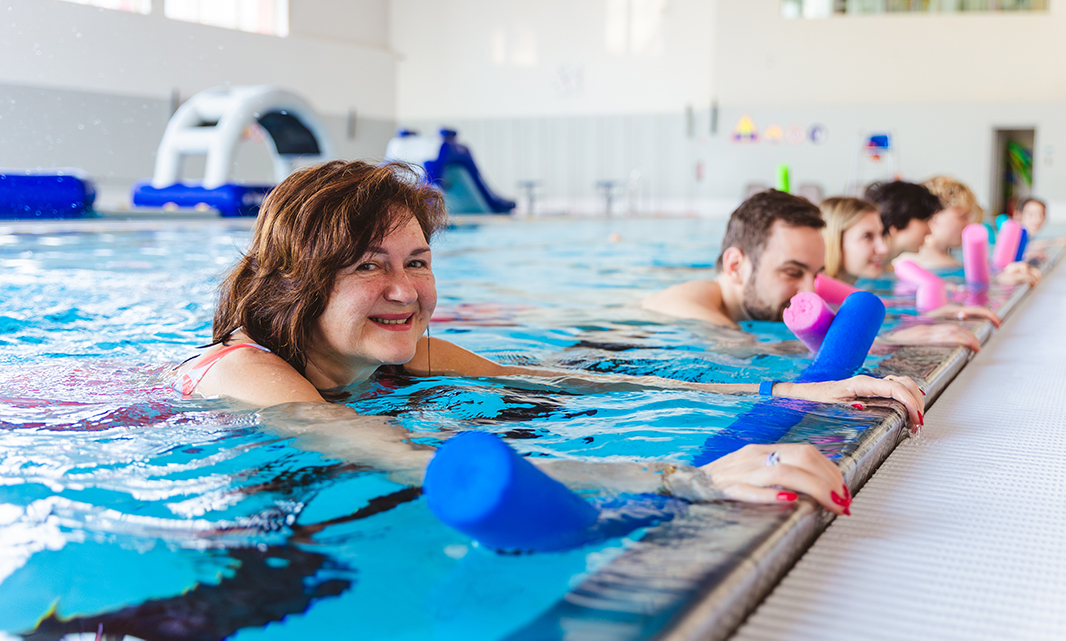
Take your workout in the water. Training in the gym or on land isn’t the only way to get in better shape. You can burn calories, fat and build muscle with aquatic fitness just as you do on land.
Aquatic fitness isn’t just for the older population and shouldn’t be underestimated. The resistance of the water against your bodyweight is as functional as holding free weights or using resistance bands. Water is denser than air and provides more resistance against gravity. Even when you’re doing cardio exercises like jogging in water, you’re working against more resistance than if you were on land.
Because of the resistance factor, water exercise is a double duty workout as far as cardio and strength training. Aquatic fitness provides a high resistance, low impact workout that builds muscle, elevates heart rate and is gentle on your joints.
Working out in the water is great for rehab recovery, overall strength and endurance. Because water provides natural resistance and buoyancy, it is perfect for all fitness levels, making it highly effective.
Your core is one of the main muscles you are working. Your core is engaged and doing more work than you may think, as it is constantly stabilizing you, keeping you upright against the movements of the water far more than on land. The resistance of the water slows down movements being more controlled that can be quick and jerky with holding heavy free weights.
In areas of recovery, you have more control under water, creating more smooth flowing motions that are less likely to aggravate injuries or add irritation to already sensitive areas of the body. When in the water, your joints experience less impact, making the pool a welcoming environment for anyone with arthritis or joint injuries. Those with knee or shoulder pain when performing movements like squats, lunges or shoulder raises can aggravate the sensitive areas of the knees or shoulder on land but are often doable in water.
Here are some other areas on how aqua fitness is so beneficial.
- Joint Support: The buoyancy of the water supports your body weight, which drastically reduces the impact on your knees, hips, and spine compared to land-based exercises.
- Natural Resistance: Water is significantly denser than air, creating multidirectional resistance. This helps you build muscle tone and endurance without needing heavy weights
- Heart Health: Being in the water pushes your heart and lungs to work efficiently, which helps lower blood pressure, improve circulation and increase overall stamina.
- Core Strength and Balance: The constant need to stabilize yourself against the moving water forces you to engage your core, leading to better balance and coordination.
- Benefits Your Brain Health: Not only is water aerobics a physical workout it also works out your brain. Physical exercise improves the cognitive function of older adults.
- Provides a Full Body Workout: Aqua fitness targets your heart and muscles at the same time. You may jog or walk in the water as part of the workout and you can use water weights.
Ashley LaMorte is a nationally certified fitness instructor and has been in the fitness industry for many years. Over the years, she has gotten the opportunity to instruct group X boot camps at gyms and train private clients from all walks of life, all over the Bay Area. She now has her own mobile fitness business LaMorte Lift. Learn more at LaMorteLift.com.