
45.6 F
Scotts Valley
November 17, 2026

Pancakes, parades and fireworks
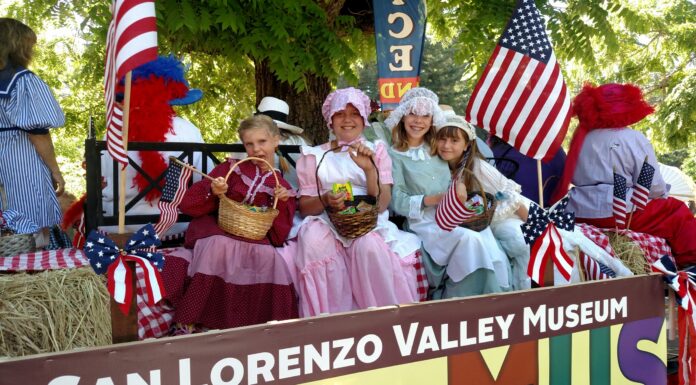
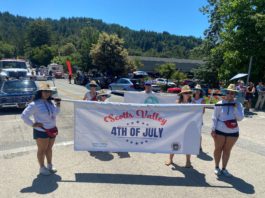
Thousands of residents of Santa Cruz Mountain communities, plus equally as many visitors, ate pancakes, watched parades, played in the sun, and watched fireworks on Independence Day.

Sports Shorts

Locals finish in top 100 in wharf race

Former SLV lineman ready to get back to the gridiron

San Lorenzo Valley High alumni and NFL lineman Andy Levitre caught up with me this weekend in a phone interview.

SV/SLV teams head to CCS play

As February draws to a close, several teams from Scotts Valley and San Lorenzo Valley high schools are headed to playoff competition in the Central Coast Section.

Mr. Money

Interest rates are the lowest they’ve been in human history, and they’ve been this low for almost seven years. On September 17, the Federal Reserve Bank, at long last, might raise its rate for overnight loans to banks – the Fed funds rate – from approximately zero to slightly above zero.They’ve been itching to raise rates for over a year now. Just last week, Federal Reserve board member, Dennis Lockhart said “the central bank is ready to hike.”I’m not convinced it will happen, but if it does, what effect will the increase have on residents of Scotts Valley and San Lorenzo Valley?Rising interest rates would be good news for savers, who would receive more interest on their savings. They would be bad for homeowners with adjustable-rate mortgages, because their monthly payments would rise. They also might be bad for home prices, as higher borrowing costs make it harder for buyers to qualify for a loan.The current ultra-low rates are the result of emergency measures taken by the Fed during the financial crisis of 2008. In an effort to prevent a depression like the 1930s, the Fed cut short-term rates to near zero to spur economic activity.That move was led by “Helicopter Ben” Bernanke, then chair of the Fed and so nicknamed because he once quipped that, if necessary, he would drop hundred-dollar bills from a helicopter to prevent another depression.Emergency measures aren’t supposed to last seven years. So Fed officials want to raise rates now, partly to show that their policy has worked.But has it?Well, the plan was to provide easy money to lift inflation – not too much, just enough to prevent deflation, or falling prices, like the U.S. experienced in the 1930s. However, low rates have had unexpected consequences:Inflation: The cycle is supposed to work this way: When the economy slows down, companies make less money and weak ones go out of business. When the economy heats up, the surviving companies can raise prices because of less competition. So inflation rises.But this long stretch of easy money has kept afloat weak companies that in a normal economic cycle wouldn’t survive, so they keep churning out supply and reducing inflation pressures. We’ve seen this in such industries as energy, mining and agriculture.Jobs: Easy money is supposed to encourage companies to hire. However, partly because of uncertainty about taxes and health care costs, companies have been reluctant to hire, instead they borrow cheap money to buy back their own stock and the stock of other companies. When companies merge, they lay off workers.The very low jobless rate of 5.3 percent reported a week ago doesn’t count people who have stopped looking for work or are not working as many hours as they want. The percentage of adults in the workforce remained very low at 62.6 percent.But the main reason interest rates aren’t likely to rise much in the near future is that the economy can’t handle it. In the last seven years, the federal debt has ballooned from $10 trillion to $18 trillion. The U.S. is paying an average interest rate of 1.5 percent on that debt.If the average rate rose by 1 percent to 2.5 percent, still very low historically, that would add $180 billion a year in borrowing cost. The government nearly shut itself down twice in recent years because lawmakers couldn’t find $30 billion in spending cuts. How on earth could we afford an extra $180 billion?My guess is that interest rates will stay low, at least for now.Mark Rosenberg is a financial adviser with Financial West Group in Scotts Valley, a member of FINRA and SIPC. He can be reached at 831-439-9910 or mrosenberg@fwg.com

Sports Shorts

Cougar wins Stanford invite in Division IV

Allergy mitigation landscaping

Jan Nelson The Mountain Gardener
According to historical records for our area the pollen count is mostly moderate in February. Depending on the weather, Pollen.com and Pollenlibrary.com show medium to high counts only for a few days this month. If you’re an allergy sufferer you don’t need a website...

Healthy Living: Your 8-year-old can run a marathon

Every child should have the opportunity to experience the sense of pride that comes with physical accomplishment. While not every kid will excel at sports such as baseball, soccer or football, all able-bodied kids can run. And most love it.

Local talent takes center stage at Kiwanis of Scotts Valley’s annual Music at Skypark

music at skypark
For the past 15 years, Kiwanis of Scotts Valley has presented an amazing array of musical talent at its annual Music at Skypark, a free community-wide outdoor concert series. The tradition continues this year on Sunday, Aug. 25, at 1:30pm when classic rock and blues...
SOCIAL MEDIA

2,613FansLike
746FollowersFollow
762FollowersFollow
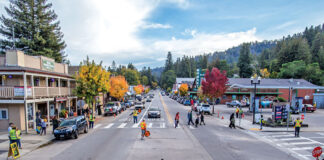
Downtown Boulder Creek

Boulder Creek gains federal Opportunity Zone status

Boulder Creek has received a federal Opportunity Zone designation, opening new opportunities to attract private investment, support local businesses and strengthen the community’s long-term...