

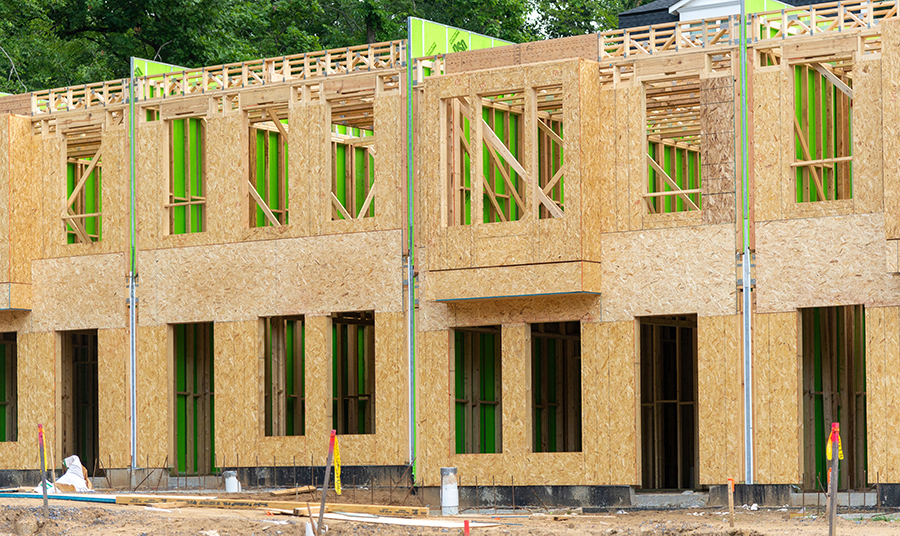
“Building costs are still high. There’s more we can do. This bill is nearly 50 provisions, but the problem is even bigger,” Sen. Elizabeth Warren (D-Mass.) stated.
Congress submitted the “21st Century Road to Housing Act” for Presidential approval as Trump said the bill was a “yawn” and allowed it to pass unsigned. “It’s not a Republican issue or a Democrat Issue,” said Sen. Tim Scott (R-S.C.), who sponsored the bill jointly with Warren. House hunters might make hay with Middle East peace, but this bill is a supply side victory over obtrusive local regulations and corporate housing ownership.
Trump opposes corporate housing proliferation and, exempting favored build-to-rent properties, the Housing Bill will limit corporate ownership to 350 houses. According to the Lincoln Institute, corporations now own 9% of urban residential plots, but local LLCs control most of these and only 2.4% are owned by out-of-state companies. The landlord’s personal relationship with tenants prevails, but five big players like American Homes 4 Rent “collectively owned 446,000 single family homes….”
Realtor Dylan Linde writes: “Here in the San Lorenzo Valley, institutional ownership has remained relatively limited. Mountain properties often have private roads, wells, septic systems, higher wildfire risk, and unique maintenance needs that don’t fit the standardized model these large investors prefer.”
Local zoning and building ordinances destroy housing opportunities and independence; Goldman Sachs reported in 2025 that deregulation could add 2.5 million homes in the next decade. Warren argues, “…this bill creates federal incentives for local communities to build more housing.” Congress would reward communities that build housing while funding home repairs and vacant office building renovations.
This bill enables builders to bypass environmental reviews when buildings are sandwiched between other buildings that passed reviews. For many, manufactured housing is better than rentals and this bill eases installation of cheaper and faster factory housing by eliminating the federally mandated permanent wheel chassis for homes that don’t move. It aids Fed-backed financing and bypasses local regulations limiting these homes to mobile home parks.
Many of Congress’s instructions revamp the Department of Housing and Urban Development. HUD will encourage localities to build housing with a single stairwell up to six stories tall, architecture widely used abroad that CalMatters says could “bring down construction costs on mid-sized apartment buildings by as much as 13% without obviously elevating fire risk.”
Congress encourages “streamlined permitting, density bonuses and zoning changes.” Standardized codes for mobile homes, ADUs and even townhouses will accelerate construction to improve affordability. Sec 210 “creates a pilot grant program to help local governments convert vacant commercial or industrial buildings into affordable housing, prioritizing economically distressed areas and Opportunity Zones.” The homeless need shelter and new “Emergency solutions providers” may get waivers of the 60% spending caps on emergency shelter beds.
Meanwhile, California Assembly Bill 306 simply seeks to freeze today’s building standards for new housing until at least 2031. Dan Dunmoyer, president of the California Building Industry Association, wonders why the last 15 year’s building codes “have added between $51,000 and $117,000 to construction costs?” He muses: “We had the most seismically safe, water-reduced, fire retardant, energy efficient homes in the world two years ago and we just keep on adding more and more and more to it….”
The Congressional bill even influences banking and finance. Lower income homeowners may appreciate opportunity zone financing and new FHA loans of $100,000 while upper income borrowers will relish higher limits on multi-family mortgages. Borrowers can get larger loans on FHA insured manufactured homes or ADUs. The bill encourages new community banks with a phase in of capital requirements and prohibits the Federal Reserve from creating digital currency reserves until at least 2030.
Over-regulated housing supply trails housing demand and this partially explains unaffordability. High interest from government deficits, high labor costs from immigration enforcement and tight environmental regulations and tariffs on building supplies don’t help. Uncertainty about war and freedom of travel hurt energy supplies that affect housing. But Congress worked together for affordability and its solutions can expand.
Robert Arne, EA, CFP, MS, of Carpe Diem Financial Life Planning, gives holistic financial advice as his client’s fee-only fiduciary. This Mortgage Loan Originator (NMLS #2565162) serves mostly Santa Cruz Mountain dwellers. These articles must not be read as personal financial, mortgage, tax or investment advice; consult appropriate professionals. Learn more at www.carpediem.financial.